 2025 COSR
Commercialization Section
Preface
Over the past few years, discussions on the commercialization of open source in China have consistently revolved around a central question: how can open source projects evolve from being "seen" to being "adopted," and further to achieving "sustainable operations"? In our previous article on commercialization, we focused more on the exploration of business models by open source enterprises—specifically, how open source software can close its revenue loop through cloud services, enterprise editions, technical support, ecosystem partnerships, and industry-specific solutions—while also examining the unresolved tensions between developer communities, the capital market, enterprise customers, and foundation mechanisms. Historically, the key concept behind the commercialization of open source in China has been "validation": validating whether open source projects can attract real users, whether community influence can be translated into corporate trust, and whether the domestic market is willing to pay for the services, stability, security, and long-term maintenance underlying open source initiatives.
Since the beginning of 2025, this issue has not disappeared, but its context has undergone profound changes. The surge in AI-native technologies, the expansion of the open-source model ecosystem, the maturation of cloud-native infrastructure, the enhancement of enterprise OSPO capabilities, and the continued participation of Chinese developers in global collaboration networks have transformed open-source commercialization from merely a growth driver for software companies into an integral part of digital industry infrastructure, the AI application supply chain, and the global technological competitive landscape.
Building upon the previous "Commercialization" chapter, this article continues to explore "how can open source in China achieve sustainability," but shifts its focus away from merely classifying business models to further analyzing the recent restructuring of the open source commercialization paradigm: on one hand, China's open source landscape has identified new growth avenues across domains such as AI, cloud-native technologies, foundational software, developer tools, and industry-specific applications; on the other hand, factors—including license governance, supply chain security, community health, enterprise contribution mechanisms, international compliance, and capital valuation logic—are imposing increasingly stringent requirements on open source commercialization. In other words, China's open source commercialization has entered a new phase: evolving from commercial experimentation with individual open source projects to systematic management of entire open source ecosystems; shifting from product validation within the domestic market to competing on capabilities within global collaborative networks; and transitioning from a focus on "open code" to the commercial organization of an "open innovation ecosystem."
This article integrates data from the 2025 Data Report as well as domestic and international research studies to analyze the new foundations, emerging opportunities, and emerging constraints surrounding the commercialization of open source in China, across dimensions such as AI-native adoption, globalization, corporate governance, return on investment, open-source entrepreneurship, and risk compliance.
1. A new paradigm for open-source commercialization: transitioning from project revenue to ecosystem assets
In 2025 and this year, when discussing the commercialization of China's open-source ecosystem, we should no longer approach the issue from the narrow perspective of "how open-source projects can generate revenue." A more precise question should be: once Chinese developers, enterprises, model platforms, and foundational software projects have entered the core zone of the global open-source ecosystem, how can China's open-source landscape transform its scale, contributions, project influence, and industrial demand into sustainable business models, global collaboration networks, and ecosystem value recognized by the capital markets?
The evolution of this issue stems from the transformation of the evaluation framework itself for open source. The opening section of the "2025 China Open Source Annual Report: Data Edition" notes that open source has evolved from a software development model into a foundational public infrastructure supporting digital civilization. For the first time, this report fully adopts the OSDGs (Open Source Development Goals) framework, integrating the three pillars—environment, society, and governance—into the open source evaluation system. Rather than focusing solely on the number of lines of code or the number of Stars, the report now emphasizes deeper values such as knowledge sharing, green computing, digital sovereignty, collaborative standardization, rule transparency, and ecosystem health. This implies that the subject matter of the commercialization analysis should also be upgraded accordingly: commercialization is not merely about revenue models, but about whether open source projects can secure a sustainable position within public infrastructure, industrial supply chains, global governance, and developer networks.
The Data Section also introduces a crucial methodology: using the "Behavior – Quality – Influence" framework as its central logical thread. First, this approach identifies actual active contributors through actions such as creating issues, submitting pull requests, reviewing code, or merging commits; next, it assesses the quality of these contributions using the Community OpenRank metric; and finally, it measures their influence within the global collaboration network using the Global OpenRank metric. This indicator system offers direct insights for commercialization: if a project relies solely on metrics like download counts, stars, or short-term public attention, but lacks sustained contributions, active maintenance by contributors, participation across diverse organizations, or global influence, it will find it difficult to build long-term commercialization capabilities. Conversely, even if a project generates modest short-term revenue, as long as it boasts high-quality contributors within its core technology stack, diverse organizational participation, and a robust collaboration network, it already possesses the essential prerequisites for commercialization.
The 2025 data reveals that China's open source landscape is currently at a highly nuanced stage: on one hand, China has already joined the global top tier of open source ecosystems, with its developer base, corporate influence, foundational software projects, and open source model ecosystem all experiencing rapid growth; on the other hand, the global appeal of Chinese projects remains insufficient, the proportion of overseas contributions from domestic projects is relatively low, and the external connectivity of collaboration networks needs strengthening. This structural contradiction—where "capabilities are rising but ecosystem appeal remains inadequate" —is precisely the core challenge in the commercialization of China's open source ecosystem.
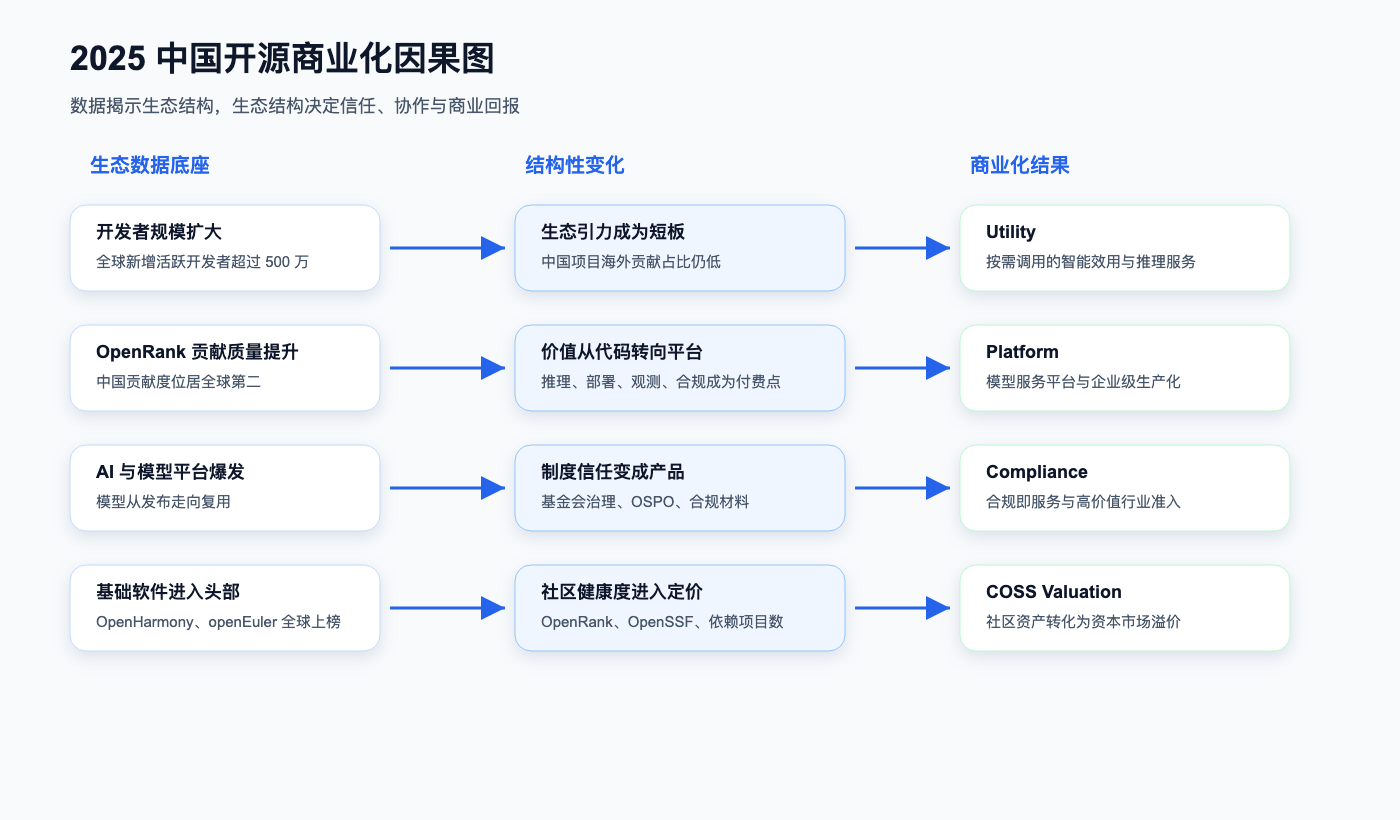
The main thread of this article unfolds as follows: China's open-source commercialization has entered a more mature phase: the growth in developer scale and the improvement in contribution quality are driving key projects into the infrastructure layer; the surge in AI and large language models is shifting commercial value from code distribution to model reuse, inference deployment, and platform services; foundational software projects have entered leading global domains, further amplifying their influence over top-tier foundations and enterprises; corporate contributions and the maturity of OSPO have enabled the financialization of open-source collaboration; and capital markets are increasingly using community health as an anchor for valuation. China's open-source commercialization is being propelled by the wave of technological advancement into its next stage of mature development.
2. Open-source ecosystem foundation: developer scale, contribution quality, and global collaboration appeal
The data reveals that the primary foundation of the open-source ecosystem in 2025 remains the size of the developer community. By the end of 2025, the total number of active developers on the GitHub platform had reached 25 million; the combined number of active developers across domestic platforms—including Gitee, AtomGit, and GitCode—approached 10 million; and the total number of active developers on the GitLab platform stood at nearly 800,000. In terms of the number of active repositories, GitHub hosted over 36 million repositories, domestic platforms hosted over 26 million, and GitLab hosted nearly 730,000. Regarding annual additions, more than 5 million new active open-source developers were added globally in 2025: GitHub saw 3.01 million new additions, domestic platforms (including Gitee, AtomGit, and GitCode) collectively added 2 million new repositories, and GitLab added over 120,000 new repositories.
These data do not simply imply that "a larger user base translates into a larger market." More importantly, the size of the developer community determines the underlying distribution efficiency for open-source commercialization. Traditional commercial software requires sales, distribution channel, and customer success teams to reach customers individually; in contrast, when an open-source project integrates into developers' daily toolchains, it can achieve low-cost adoption through developer downloads, trials, Forking, contributions, documentation dissemination, and community Q&A. In other words, the developer community size constitutes the foundational market layer for open-source commercialization.
However, scale does not automatically translate into commercial success. The Data Section shows that China has over 2.1 million active developers on the GitHub platform, ranking third globally; when including domestic platforms such as Gitee, AtomGit, and GitCode, the total number is expected to exceed 3.5 million, placing China second worldwide. Meanwhile, the number of new active developers joining GitHub from China is only around 15,000 by 2025, whereas the number of new developers on domestic platforms—after deduplication—exceeds 1 million. This trend indicates that the developer activity landscape in China is undergoing a shift in platform structure: the growth rate of new developers on global platforms is slowing down, while the growth of active developers on local platforms is stronger.
This will yield a dual commercial outcome. On the positive side, domestic platforms have attracted a large number of domestic enterprises, individuals, and university developers, thereby creating a stronger local demand pool for domestic foundational software, industry-specific open-source initiatives, and model communities. On the negative side, if developer activity is predominantly concentrated on domestic platforms while international collaboration networks remain underdeveloped, the global visibility of Chinese projects, the participation of overseas contributors, and the international commercialization of these projects will be constrained. Therefore, the commercialization of China's open-source ecosystem should not merely focus on expanding its domestic user base but must also actively cultivate global collaboration networks. This explains why the concept of will serve as a core metric in the subsequent discussion.
The Data Section also provides similar signals at the active repository level. By 2025, the global number of active repositories will exceed 11 million: GitHub will add 5.9 million new repositories, while domestic platforms such as Gitee, AtomGit, and GitCode will collectively add 5 million new repositories; GitLab will add over 110,000 new repositories. Over the past decade, the number of active repositories on GitHub has grown from 2.23 million to 6.32 million, and by 2025, Gitee is expected to reach a milestone high of approximately 4,389,000 repositories. The continuous growth in the number of repositories indicates that the open-source ecosystem is still in a phase of expanding innovative supply. However, what commercial stakeholders are truly concerned about is: which repositories will evolve from "projects" into "products," which projects will transition from "products" into "infrastructure," and which pieces of infrastructure will become "ecosystem control points."
Therefore, the commercialization phase requires transforming "data scale" into "structural judgment": the growth of developers and repositories provides the market foundation for open-source commercialization; the migration of the platform architecture determines whether commercialization should focus on a domestic, closed-loop model or on a global, networked approach; and the quality of contributions and the project's influence determine whether the project can gain the trust of enterprise customers, foundations, and capital markets.
2.1 From Activity to Contribution: How OpenRank is Transforming Commercialization Judgment
The Data Section uses the OpenRank Contribution Score to measure high-quality collaborative activities—such as code commits, review feedback, and issue fixes—and explicitly states that this metric provides a better indication of the depth and sustainability of technical collaboration than simple activity levels alone. This is particularly important for commercial adoption: when enterprise customers procure commercial open-source services, their real concern is not whether a project is highly active, but whether it possesses adequate maintenance capabilities, responsive support, and a stable roadmap.
In 2025, a concerning phenomenon emerged in global OpenRank data: the global OpenRank contribution count increased from 7.47 million to 20.52 million between 2016 and 2024, but declined to approximately 19.26 million by 2025; the OpenRank influence count rose from approximately 26.35 million to 90.88 million between 2016 and 2023, only to drop significantly to around 56.40 million by 2025. The explanation provided in the Data Section is that, with the widespread adoption of generative AI tools, certain tasks previously dependent on community collaboration have been replaced by technology; while this enhances individual efficiency, it may reduce the need for interaction and the frequency of collaboration among developers; simultaneously, some Chinese developers have shifted to domestic platforms such as GitCode and Gitee, leading to an increase in small-scale teams and individual projects, thereby relatively weakening external connectivity.
A research team from the University of Central Europe and the Kiel Institute for the World Economy has published a paper titled "Vibe Coding Kills Open Source." The paper argues that AI agents can assist users in selecting, combining, and modifying open-source software to boost productivity; however, they also diminish users 'opportunities to read documentation directly, submit issues, participate in discussions, or interact with maintainers. If maintainers' incentives primarily stem from direct user engagement, the use of AI-mediated tools may undermine the open-source ecosystem. The observed decline in collaboration frequency observed in the data analysis forms a causal loop with the "used but unseen" risk posited in the paper: AI enhances development efficiency, leading to a portion of collaboration being automated away; as collaborative interactions decline, project maintainers find it more difficult to capture feedback, build reputation, or identify commercial opportunities; and weakened maintenance incentives may, in turn, negatively impact the long-term quality of open-source projects.
However, China's data reveals another side story. The Data Section indicates that Chinese developers place greater emphasis on deep-level contributions: with approximately one-third of the developer influence in the United States, they account for nearly 50% of the total contribution volume among open-source developers in the U.S., and continue to grow at a rate of 7.54%; by 2025, China's OpenRank contribution value will rank second globally at 254,963, trailing only the United States at 297,884. This demonstrates that China's open-source landscape is no longer merely about "high usage" but is now approaching the top tier globally in terms of high-quality contributions.
This gives rise to the first commercialization chain: China's increasing high-quality contributions make it easier for Chinese enterprises and projects to integrate into the global technology supply chain; however, the decline in global collaborative interactions and the strengthening of intra-platform circulation diminish the external visibility and ecological appeal of these projects. Therefore, China's open-source commercialization must evolve from "I can contribute" to "I can attract global contributions."
This is why enterprise-level open-source commercialization should not be limited to functional development alone; it must also involve investment in community operations, developer relations, English-language documentation, global issue resolution, transparent roadmaps, and foundation governance. High-quality contributions foster technical trust, but it is open governance that transforms this technical trust into commercial trust.
However, the author believes that the period from 2025 to 2027 will be a three-year window during which AI will drive profound transformation across the entire software industry. During this period, the activity level of open-source projects and the volume of shared data will experience significant fluctuations, depending on changes in how enterprises allocate resources to open-source initiatives, the adoption rate of AI-powered coding among developers, and the proactive maintenance practices adopted by open-source projects – a topic that will be further explored in the following sections.
2.2 From Contribution Output to Ecological Gravity: The Critical Weakness in Globalization and Commercialization
The Data Section reveals the most critical weakness in the commercialization of China's open-source ecosystem within the context of cross-border contribution flows. Chinese developers are highly active in U.S.-led mainstream international projects such as Linux, Kubernetes, and PyTorch, with their contribution density ranking among the highest globally; however, there is insufficient reverse flow—Chinese domestic projects still receive limited substantive participation from the international community, reflecting the "Center–Periphery" structure inherent in global open-source collaboration.
Comparing the contribution distribution across independently initiated projects in China and the United States makes this issue clearer. In U.S.-led projects, domestic developers contribute only 38.21% of the total; over 60% of contributions come from overseas sources—specifically, China contributes 7.81%, Germany 6.84%, and Canada 5.06%. In contrast, in China-led projects, domestic contributions account for as high as 79.14%, while U.S. contributions amount to just 6.27% and Canada's 1.59%; China ranks 10th in terms of international collaboration level. The Data Section thus highlights that the core of future open-source competition has shifted from "talent export" to "ecosystem attractiveness"; the ability to attract global developers to engage in deep collaborative development has become a key criterion for measuring a nation's open-source leadership.
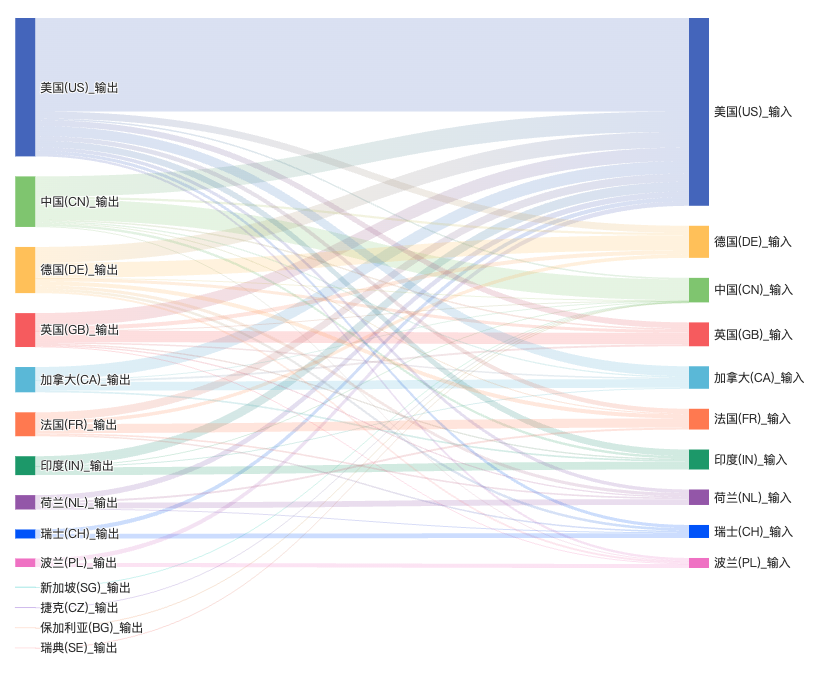
This has a very direct impact on commercialization. If an open-source project is primarily contributed to by local developers, it can still establish a business model within its home market—such as through government and enterprise procurement, industry-specific solutions, domestic substitution, private deployment, or technical support. However, if the project aims to become a global commercial open-source company or if it wants to gain the trust of overseas enterprises for use in critical systems, it must demonstrate two things: first, that the project is not a technological asset owned by a single company or region, but rather public infrastructure that can be maintained collectively by a global community; second, that the project's roadmap, licensing terms, security response mechanisms, and governance framework will remain stable even if the managing entity changes.
This explains why "foundation stewardship" and "institutional security" will become important themes in the 2025 Commercialization Section. The phenomenon of projects such as Valkey gaining attention following the modification of the Redis license is summarized as the "Upstream Moment"; it is argued that projects hosted by neutral foundations can provide an institutional sense of security. The findings from the Data Section regarding the international contribution structure of Chinese and U.S. projects demonstrate from another perspective that institutional governance is not merely an added benefit, but rather a prerequisite for Chinese projects to expand their overseas contributions and enter high-value markets.
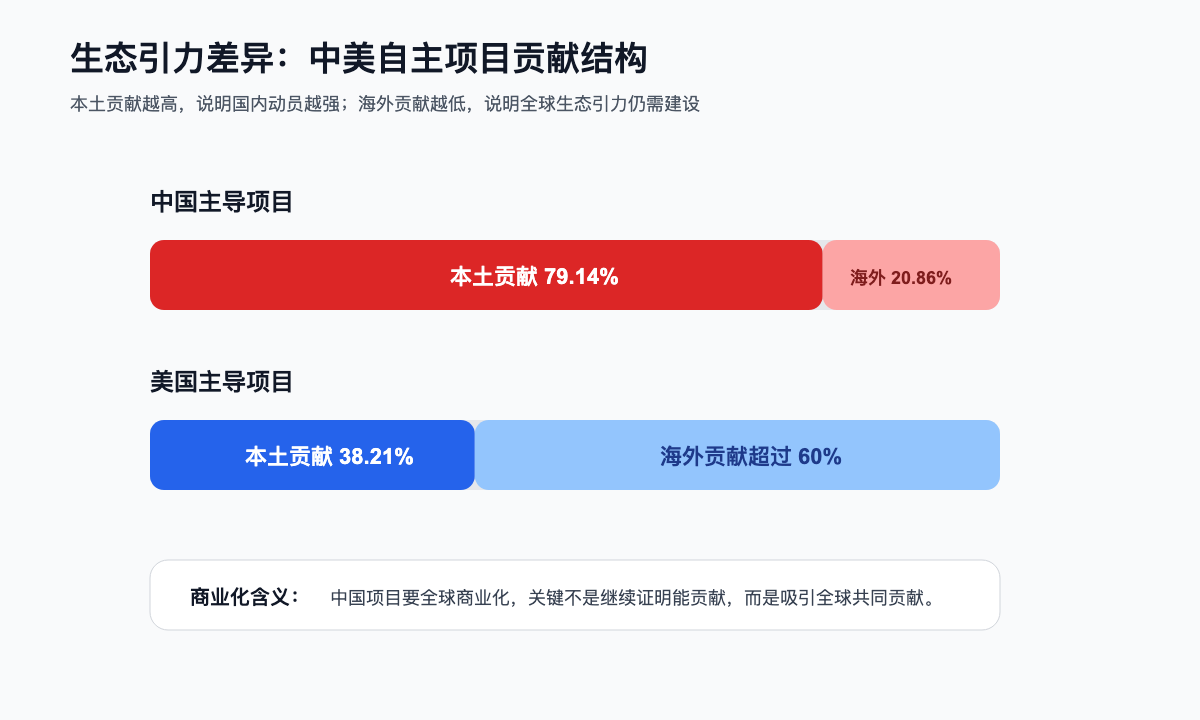
Therefore, the high proportion of domestic contributions in China's projects reflects its strong domestic industrial mobilization capability; however, the low proportion of overseas contributions indicates insufficient global ecological appeal. This lack of ecological appeal can hinder overseas commercial procurement and international capital recognition; consequently, the commercialization of China's open-source initiatives must lower the barriers to overseas participation through foundation governance, transparent roadmaps, international documentation, open contribution mechanisms, and compliance capabilities.
This also requires Chinese open-source enterprises to reframe their approach to "going global." Expanding open-source projects overseas is not merely about translating the README file into English or promoting them on international social media platforms; rather, it involves encouraging overseas developers to submit pull requests, motivating overseas companies to integrate these projects into their production systems, and enabling overseas foundations, standards organizations, and capital markets to recognize the project's governance stability and ecosystem resilience.
3. When AI Becomes Open Source
3.1 Technical Map: How the AI revolution is reshaping the focus of commercialization
The Data Section reveals that large AI models have become the most significant technology growth driver by 2025. The annual growth rate for AI large-model-related repositories exceeded 210%, and since 2024, they have taken the top spot among all technology sectors; open-source models such as Qwen, Llama, and DeepSeek have rapidly garnered millions of star ratings, driving the emergence of the "Model-as-a-Service" paradigm and significantly lowering the barrier to entry for AI applications. Meanwhile, cloud infrastructure platforms—including Kubernetes and Terraform—continue to enjoy high user activity, while foundational software solutions—such as databases, operating systems, big data platforms, and IoT platforms—maintain steady growth, collectively forming the digital foundation.
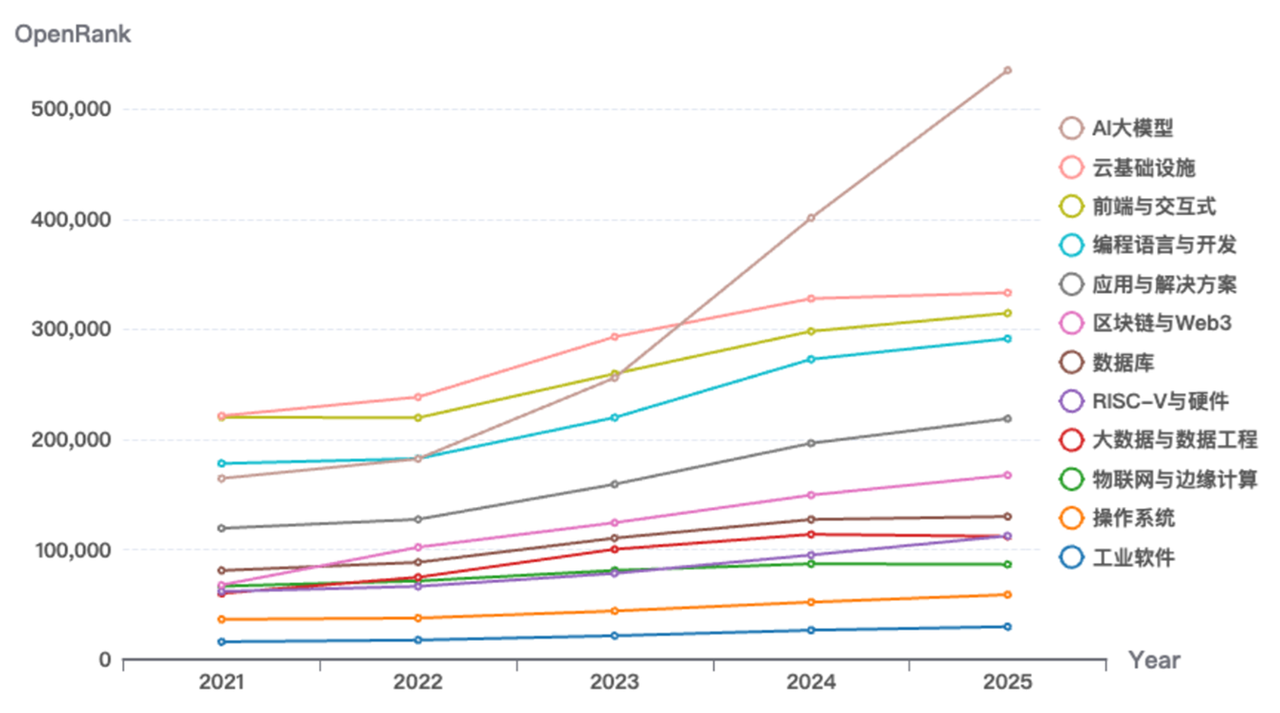
This dataset indicates that the technological landscape for 2025 will not be characterized by an "isolated AI breakthrough," but rather by an "AI-driven, cloud-based supported, and fundamentally technology-driven" ecosystem. The rapid growth of AI initiatives is giving rise to new demands—including model invocation, inference optimization, Agent frameworks, RAG tools, and model service platforms; cloud-native infrastructure is designed to accommodate these emerging workloads; while operating systems, databases, compilers, open-source hardware, and edge computing provide a long-term, stable industrial foundation. As a result, commercialization opportunities are shifting from standalone software sales to a multi-layered infrastructure stack.
The "Annual Cloud Native Survey: The Infrastructure of AI's Future," released by the CNCF in January this year, reveals that 66% of organizations already use Kubernetes to host generative AI workloads; however, 52% of organizations do not build or train AI models, 37% use managed APIs, and 25% host their own models (Source: CNCF, Annual Cloud Native Survey: The Infrastructure of AI's Future, 2026, pp. 6–7). This indicates that the majority of enterprises are not model producers but rather model consumers and integrators. As a result, the primary focus in commercial, high-frequency use cases is no longer on "training a larger foundational model" but on "integrating these models into business systems in a stable, cost-effective, secure, and compliant manner."
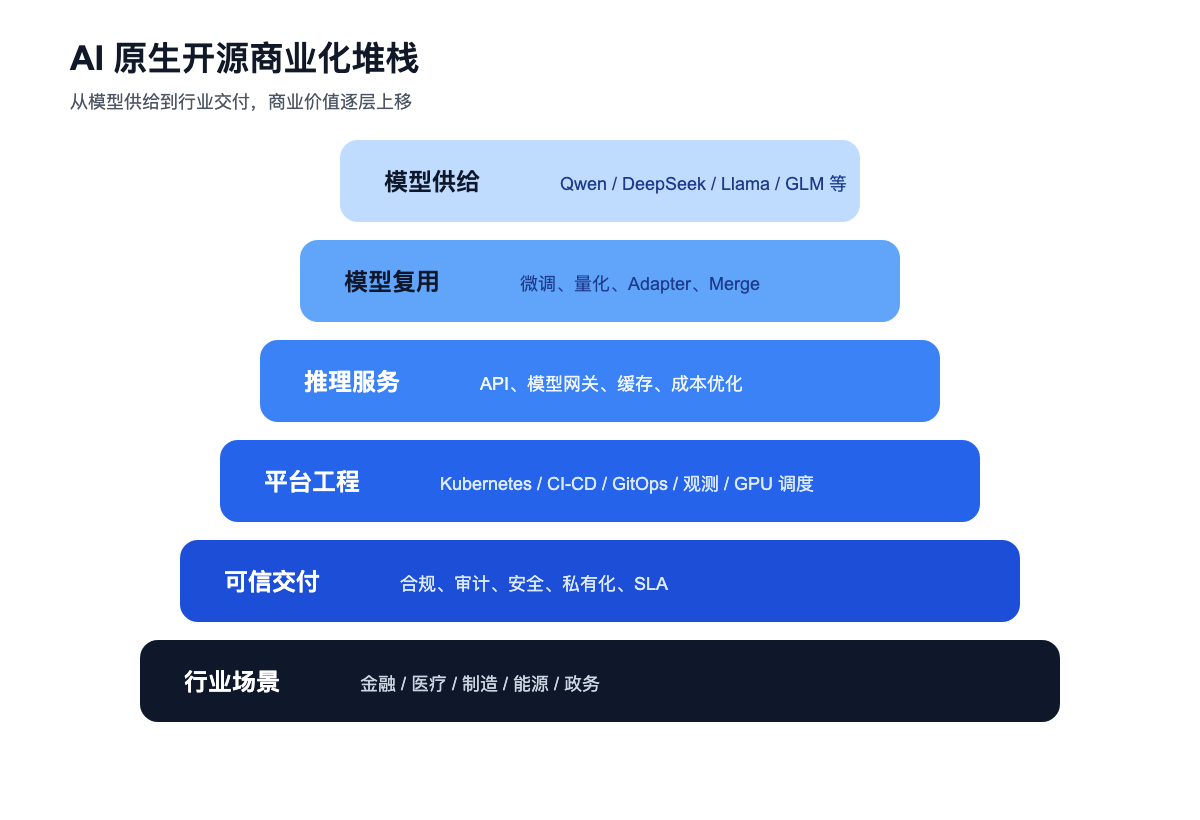
This is precisely the root cause of the evolving open-source commercialization models. In the past, common approaches to commercializing open-source software included Open Core, enterprise editions, managed cloud services, technical support, and professional services. In the AI-native era, these models still exist, but the focus of profitability is shifting toward optimizing inference costs, model deployment platforms, private and hybrid cloud solutions, industry-specific fine-tuning, compliance auditing, model gateways, Agent workflows, data connectors, and observability platforms. In other words, as AI becomes increasingly widespread, enterprises will have a growing need for infrastructure-based open-source commercial services.
This ecosystem can be summarized as follows: the rapid growth of AI large-model repositories has led to an oversupply of models and the swift proliferation of model capabilities; this proliferation has reduced the scarcity of individual models, shifting competition toward inference efficiency, deployment stability, and industry integration; since most enterprises do not train their own models but instead consume existing models, inference platforms, cloud-native deployment, model operations and maintenance, and compliance services have become the core drivers of commercialization.
The shift from "selling software" to "selling intelligence" does not mean that all open-source companies will transform into API-focused enterprises; rather, intelligent capabilities will increasingly be consumed on-demand—much like electricity—while the commercial ecosystems surrounding these capabilities encompass power grids, transformers, metering systems, security standards, and industry-specific integration solutions. Public APIs represent the "electricity"; private deployment corresponds to "corporate-built substations"; the cloud-native modeling platform serves as the "transmission and distribution network"; and compliance services equate to "security certification and regulatory reporting."
3.2 Model Platform Data: The Business Logic from "Model Deployment" to "Model Reuse"
The 2025 Data Section, which incorporates data from Hugging Face and ModelScope (the ModelScope Community), represents a significant new development that must be prioritized in the Commercialization Section. The report notes that Hugging Face and ModelScope are no longer merely platforms for publishing and distributing models; instead, they are evolving into critical infrastructure that supports both the expansion of model supply and developer collaboration and interaction, as well as the ecosystem feedback loop. In the context of the large language model ecosystem analysis, the Data Section further indicates that as of the end of 2025, Hugging Face had over 13 million users and 2.5 million models, while ModelScope attracted more than 16 million users and hosted over 150,000 models.
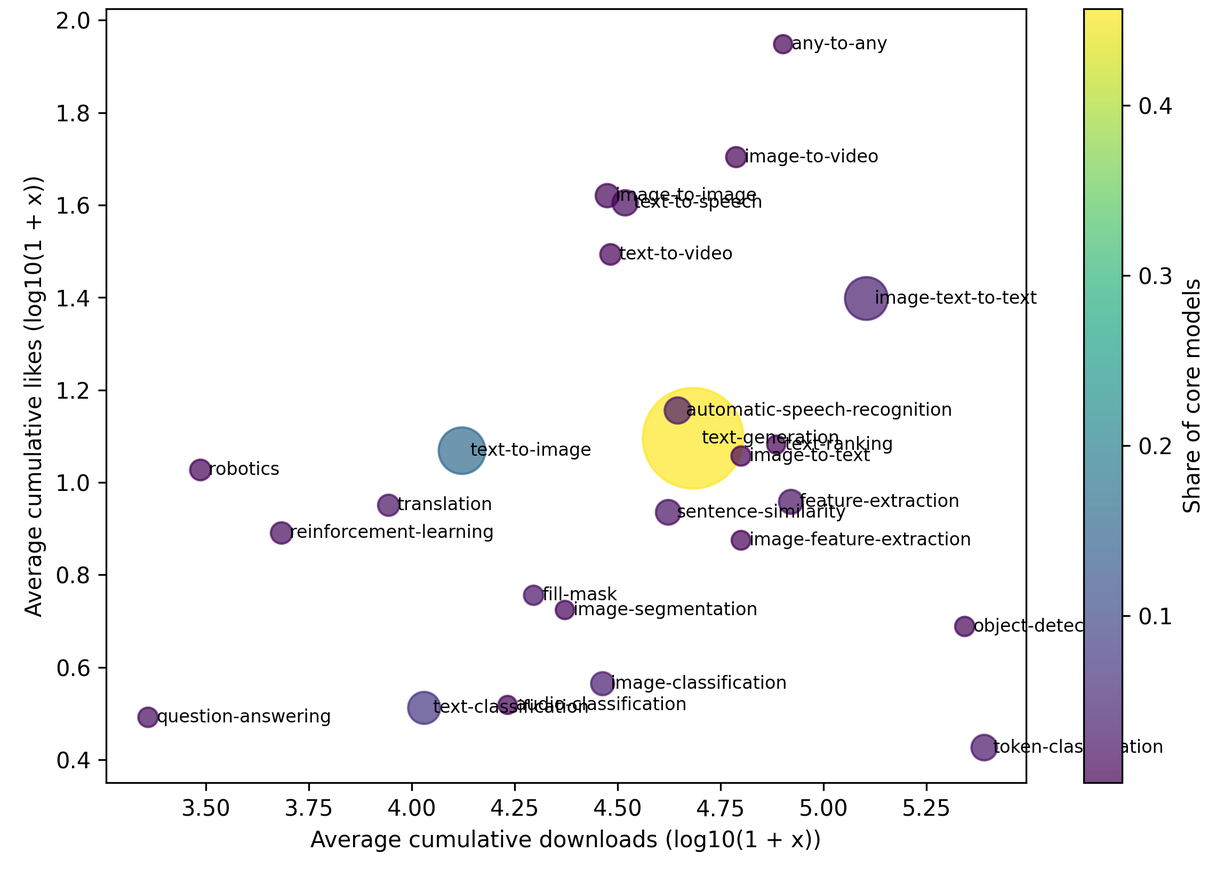
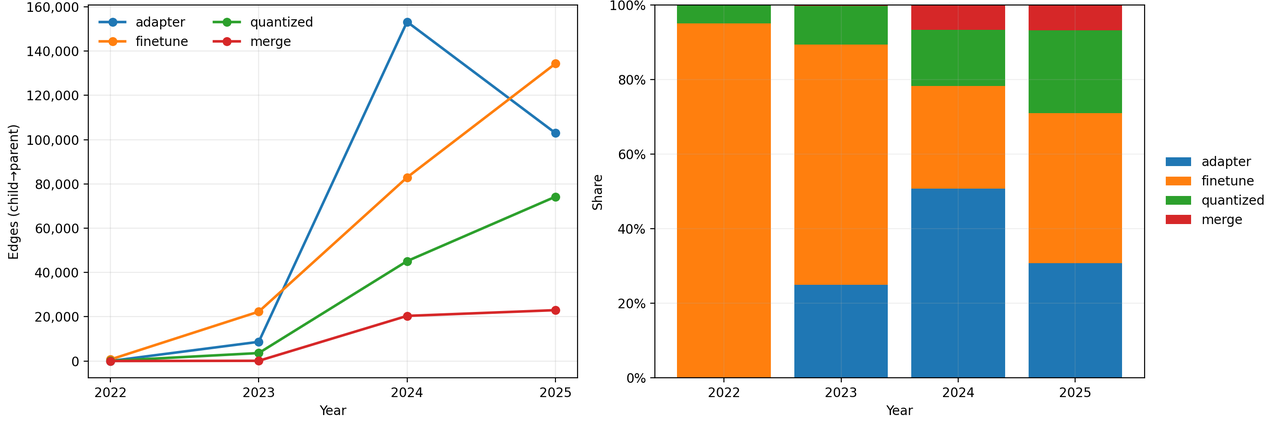
This shift is critically important for commercialization: in the era of open-source code, commercialization revolves around software packages, repositories, licenses, and deployment environments; in the era of open-source models, commercialization revolves around model publishing, downloading, liking, fine-tuning, quantification, derivative models, datasets, inference endpoints, and model cards. As a result, model platforms have become a new entry point for developers and have also served as the market infrastructure for commercial open-source companies.
The Data Section notes that the model ecosystem is shifting from "release" to "reuse": over the past two years, there has been a significant increase in activities involving fine-tuning, adapting, and quantizing existing models – indicating that platforms are no longer solely focused on releasing new models, but rather on continuously reusing and further developing their underlying base models. This shift precisely aligns with the evolution of commercialization opportunities. While releasing foundational models can enhance brand visibility, the true sustainable commercial value often emerges during the reuse phase: enterprises integrate these models into their local knowledge bases, fine-tune them into industry-specific assistants, deploy them on edge devices, optimize inference throughput, incorporate them into Agent toolchains, and implement auditing and access control mechanisms.
The disparity between download counts and like counts can also aid in understanding commercialization. The Data Section indicates that downloads are more indicative of whether a model is consistently integrated into products, scripts, workflows, or local deployment solutions, whereas likes are more indicative of whether a model has received concentrated recognition within a specific time window; in November 2025, Hugging Face saw a net increase of 4,276 million downloads and a net increase of 584,800 likes; by January 2026, the net increase in downloads had risen to 50,707 million, and by February 2026, it had further climbed to 204,969 million. In other words, likes reflect popularity, while downloads reflect usage; popularity can foster brand awareness, whereas usage represents a more tangible foundation for commercialization.
The Data Section also notes that Chinese models have evolved from being active participants on the platform to becoming a significant driving force. According to Hugging Face's official overview, China has surpassed the United States in both monthly and total model downloads; over the past year, Chinese models accounted for 41% of the platform's total downloads, representing the largest single market share. The number of models hosted on Baidu's Hub increased from zero in 2024 to over 100 in 2025, while the number of models published by ByteDance and Tencent grew by 8–9 times, respectively. This indicates that Chinese models are not merely "visible" but are being continuously utilized.
This gives rise to a third chain: the expansion of model platform scale reduces model distribution costs; the increase in model downloads and derivative reuse shifts commercial value from one-time deployment to continuous integration; the growing share of model downloads in China indicates that China's open-source AI has integrated into the global usage ecosystem; however, the asynchronous nature of downloads and attention also serves as a reminder that commercialization should not be judged solely by public sentiment but by whether the model has been incorporated into long-term workflows.
This imposes higher requirements on Chinese open-source AI companies. Whether a model achieves successful commercialization should not be judged solely by its benchmark scores or social media popularity on the day of release, but rather by whether it enjoys stable downloads, is continuously adapted for various use cases, is integrated into enterprise systems, comes with a clear licensing agreement, and can provide inference endpoints, private deployment options, fine-tuning tools, evaluation frameworks, security audits, and commercial support.
4. Enterprise Revenue Growth Strategy: From Technological Influence to Industrial Foundation
4.1 Corporate influence: From "technological complementarity" to "strategic necessity"
The Data Section explicitly states that in the Chinese market, open source has evolved from being merely a "technical supplement" to becoming a "strategic necessity." This statement is key to understanding how enterprises are commercializing open source initiatives. In the past, corporate open source efforts might have been driven by engineering culture, brand recruitment, or technical outreach; today, they have become strategic moves as companies compete for developer ecosystems, technical standards, supply chain control points, and influence over AI infrastructure.
In the global enterprise rankings, Microsoft ranks first with an OpenRank score of 205,596.64, Huawei comes in second with a score of 89,368.78, and Google ranks third with a score of 75,962.65; Huawei is the highest-ranked Chinese company among the global Top 15. The Data Section notes that Huawei's continuous investment in projects such as OpenHarmony, Ascend AI, and KubeEdge has positioned it as one of the few Chinese enterprises capable of simultaneously influencing the foundational software, AI chips, and IoT ecosystems.
This demonstrates that open-source influence has become deeply integrated into corporate infrastructure strategies. The case of NVIDIA is particularly illustrative: as noted in the Data Section, NVIDIA rose from 9th place at the beginning of 2025 to 4th place by the end of the year; this upward trajectory was driven by its systematic open-source strategy across areas such as the CUDA ecosystem, AI inference optimization tools, and large-model training frameworks, successfully transforming its hardware advantages into competitive advantages within its software ecosystem. For Chinese enterprises, this offers an important lesson: hardware, cloud services, databases, operating systems, or model capabilities alone are insufficient to build a long-term competitive moat; only when these elements become de facto standards through open-source toolchains and developer ecosystems can they evolve into a commercialized competitive moat.
The Chinese enterprise ranking showcases a landscape characterized by "strongly positioned leading players, a clear tiered structure, and the emergence of rising stars." Huawei ranks first with a score of 89,368.78, significantly outpacing Alibaba's 26,349.25; Ant Group, ByteDance, and Baidu occupy the third through fifth positions, respectively; while PingCAP, ESPRESSIF, Tencent, Fit2Cloud, and DaoCloud all make the top ten. Among them, ByteDance's OpenRank stands at 16,625.76, representing a substantial year-on-year increase of 6,703.16, indicating its transition from application-layer innovation to delivering technological infrastructure solutions.
This set of enterprise data can be used to identify three distinct commercialization pathways.
The first category is the full-stack infrastructure solution. Represented by Huawei, this approach leverages OpenHarmony, openEuler, MindSpore, the Ascend ecosystem, edge computing, and communication protocols to build comprehensive open-source influence across endpoints, cloud, chips, and frameworks. Its commercial success stems not only from software revenue but also from ecosystem standards, hardware compatibility, industry-specific solutions, and the demand for self-reliance and technological independence.
The second category comprises cloud and data infrastructure solutions, represented by companies such as Alibaba, PingCAP, SelectDB, StarRocks, and Zilliz, which have developed commercial offerings centered around databases, data lakes and warehouses, vector search, cloud-native middleware, and AI data foundations. As AI applications become increasingly widespread, enterprises will have a growing demand for high-quality data management, vector search, and real-time analytics – which in turn enhances the commercial value of these open-source projects.
The third category comprises AI-native toolchain-based solutions. Represented by companies such as ByteDance, LobeHub, GPUStack, FastDeploy, and Spring-AI-Alibaba, these solutions drive growth by integrating agents, inference, reinforcement learning, GPU scheduling, enterprise AI development frameworks, and low-code AI tools. These projects indicate that commercialization opportunities are expanding beyond the large-scale model infrastructure itself toward a toolchain designed to "make models usable."
This also explains why the rankings of certain companies can fluctuate. As noted in the Data Section, DaoCloud OpenRank dropped from 6th place at the beginning of the year to 15th place by the end of the year—a decline of over 60%—due to factors such as an inability to sustain community engagement and project iteration, as well as the lack of influential new projects in the AI-native infrastructure sector. This case of declining ranking is well-suited for inclusion in the Commercialization Section: open-source influence is not a one-time asset but the outcome of continuous investment. If companies fail to align their open-source projects with the annual technological trends, even those that once led the cloud-native landscape may lose developer attention in the AI-native era.
4.2 Project Impact: The commercialization of foundational software is undergoing a "Foundation-to-Industrial" transformation.
The 2025 Global Open Source Project Influence Ranking saw a milestone: OpenHarmony ranked first worldwide with an OpenRank of 60,089.18, while openEuler ranked tenth globally with an OpenRank of 16,257.57; among the Global Top 100 open source projects, 49 were from the United States and 12 were from China – making China the second-largest contributor and the only Asian country featured on the list. This indicates that China's open source projects are no longer merely active within specific regions but have also joined the ranks of leading global initiatives in the fields of foundational software and AI.
The Data Section indicates that OpenHarmony's score is nearly 1.5 times that of the runner-up, Azure, highlighting China's substantial investment and strong ecosystem aggregation capabilities in the field of IoT operating systems; openEuler's inclusion among the top ten signifies China's significant position in the server operating system sector. The Chinese project rankings also show that OpenHarmony and openEuler rank first and second, respectively—OpenHarmony's score exceeds 60,000, which is nearly four times that of the second-place openEuler and more than seven times that of the third-place MindSpore; openKylin and Anolis OS also rank among the top performers, demonstrating that the domestic operating system ecosystem is gaining increasing overall depth.
The underlying commercial logic cannot be explained solely by the traditional "software licensing" model. When an open-source operating system project is deployed on end-user devices, servers, IoT platforms, in-vehicle systems, industrial equipment, or government and enterprise infrastructure, its commercial value does not primarily stem from the software itself, but rather from the comprehensive ecosystem surrounding it—including compatibility certification, industry-specific distributions, migration services, end-of-life support, security hardening, hardware compatibility, application ecosystems, and governance trust. The "Infrastructure Strategy": Infrastructure projects deliver stability, security, compliance, and long-term maintainability—rather than merely performance.
This underscores the importance of foundation governance. Both OpenHarmony and openEuler are affiliated with the OpenAtom Open Source Foundation; the growing influence of these projects demonstrates that a neutral governance platform can effectively bring together foundational software providers, developers, and industry partners. For key industry customers, the presence of transparent governance, an open roadmap, and multi-stakeholder involvement behind a project fosters long-term trust more effectively than the commitment of a single enterprise alone. As a result, commercialization is no longer about "a company owning an open-source project and selling an enterprise edition," but rather about "a foundation serving as a public foundation, with commercial distribution vendors providing trusted delivery solutions tailored to specific industry scenarios."
China's Top 15 open-source projects also reveal that the AI and large-model technology stack has emerged as a new growth driver. MindSpore and PaddlePaddle rank third and fourth, respectively; ModelScope ranks sixth; VolcEngine ranks seventh; and verl ranks twelfth. These projects represent the open-source investments made by Chinese internet enterprises in the fields of large-model training, inference, and optimization. In the realm of databases and middleware, projects such as Apache Doris, TiDB, StarRocks, and Milvus continue to appear on the list, indicating that China has already entered a phase of substantial commercialization in its data infrastructure landscape.
This gives rise to the fourth chain: when foundational software projects reach the global top tier, it demonstrates China's capability to build a public technology foundation; when this public foundation enters key industries, it shifts the commercial value from software functionality to trusted delivery; trusted delivery requires foundation governance, industry-specific distributions, long-term support, and ecosystem certification; therefore, the core of foundational software commercialization lies in "foundational transformation" – not in the productization of isolated components.
4.3 Emerging Open-Source Forces: AI Agents and Inference Toolchains Mark the Dawn of the "Scenario-Defined" Era for Commercialization
Mature projects define the foundation; emerging AI projects determine the direction. Among the Top 30 global open-source AI projects for 2025, as many as 19 are AI-related – accounting for over half of the list – including Cherry Studio, llama.cpp, bolt.new, Roo Code, eliza, cline, aider, OpenHands, goose, modelcontextprotocol/servers, and smolagents. These projects share a common characteristic: they are not traditional foundational libraries, but rather AI-native tools that directly transform the ways in which development, deployment, and human-computer interaction are carried out.
The New Forces Ranking illustrates how open-source innovation is evolving from "technical components" to "workflow entry points." AI programming assistants, Agent frameworks, model context protocol servers, desktop LLM clients, and full-stack application generation tools—all represent new entry points for developers to interact with AI. Those who master these entry points may well seize the commercialization opportunities within the next-generation developer toolchain.
The China Project Growth Ranking also reflects a similar trend. verl ranks first on the China Open Source Project Influence Growth Pioneer List, with its overall ranking rising by 1,582 positions; projects such as spring-ai-alibaba, ktransformers, kwdb, FastDeploy, gpustack, ha_xiaomi_home, and Mooncake have experienced rapid growth. The Data Section further highlights that spring-ai-alibaba integrates Agent, Workflow, and multi-agent capabilities into the Spring ecosystem, lowering the barrier for Java-based enterprises to develop AI applications; FastDeploy focuses on the deployment of large-model inference and is optimized for domestic chips; gpustack addresses the GPU resource scheduling challenge in concurrent multi-model inference; these projects collectively demonstrate that AI is transitioning from research prototypes to production-ready solutions.
The causal relationship here is clear: for enterprises to effectively leverage AI, they require familiar development frameworks, low-cost inference capabilities, compatibility with domestic chips, GPU scheduling, and integration of industry-specific data – all of which have driven the rapid growth of AI toolchain projects. Since these toolchain projects are more closely aligned with real-world business scenarios, they are better positioned to evolve into commercial products and paid services.
This also signifies that China's open-source commercialization has entered the "Scenario-Driven" era. As noted in the Data Section, by 2025, leapfrogging projects will no longer pursue generality but will instead be deeply integrated into specific scenarios—ranging from the RLHF training framework developed by the ByteDance team, to a series of inference optimization products and tools collaboratively created by teams such as Qingcheng Jizhi and Qingmao Intelligence in partnership with the Ascend ecosystem, to KaiwuDB's IoT database and Xiaomi's smart home connectivity solutions—marking an evolution of open-source from "technology showcase" to "problem-solving." This statement serves as an ideal core insight for the Commercialization Section. The essence of commercialization lies not in "what I have open-sourced," but in "identifying the real-world problems faced by stakeholders and enabling the continuous propagation of these solutions within the open-source community."
5. How to calculate revenue streams: Utility, ROI, OSPO, and Capital Valuation
5.1 AI-native business models: From Open Core to Utility, Platform, and Compliance
Based on the above data, by 2025, at least three clearer patterns will emerge for the commercialization of AI-native open-source solutions.
The first approach is the Utility Model: selling smart utility. As model supply increases, inference costs decrease, and the scale of downloads and reuse expands, the capabilities of general-purpose models will gradually shift from being scarce assets to being measurable resources. Enterprises are not purchasing "a single model," but rather stable token throughput, low latency, availability, private deployment options, controllable costs, and SLAs. The Linux Foundation's Open Source AI Economic Impact Report, titled The Economic and Workforce Impacts of Open Source AI, reveals that two-thirds of the surveyed organizations believe the deployment cost of open source AI is lower than that of proprietary AI; nearly half of these organizations choose open source AI primarily for cost savings. This cost advantage drives broader adoption, which in turn accelerates the commercialization of APIs, inference services, caching, routing, and observability platforms.
The second approach is the Platform Model: offering production-ready capabilities. According to the CNCF's "Annual Cloud Native Survey: The Infrastructure of AI's Future," only 47% of organizations deploy AI models occasionally, while just 7% deploy them daily (Source: CNCF, Annual Cloud Native Survey, 2026, p. 8). This highlights the scarcity of production-ready capabilities. Platform services built around Kubernetes, KServe, Kubeflow, Prometheus, Argo, OpenTelemetry, GPU scheduling, and model gateways will serve as a crucial foundation for the commercialization of open-source AI. The more models an enterprise deploys, the greater its need for a unified platform; the more mature the platform, the easier it is for open-source projects to enter production; and the deeper an enterprise deploys these solutions into production, the more sustainable its commercialization becomes.
The third approach is the Compliance Mode: selling trusted compliance solutions. As the number of model reuse scenarios increases, the Data Section highlights that issues surrounding the integrity of model licensing have become increasingly prominent; whether licensing terms are clear and whether they support subsequent model reuse is now a tangible challenge within platform ecosystems. This means that the commercialization of open-source AI cannot sidestep concerns related to licenses, training data, model licensing, derivative models, risk assessment, and auditing. We propose "Compliance-as-a-Service" (CaaS), which integrates compliance requirements—such as GDPR, SBOM, AI risk classification, vulnerability response, and data localization—into product capabilities. In high-value industries, compliance is not merely an additional cost but a prerequisite for procurement.
These three models can be combined. An open-source AI company can attract developers using open-source models and toolchains, drive high-frequency adoption through low-cost inference services, deploy its platform-based products in enterprise production environments, and serve financial, healthcare, manufacturing, and government clients through compliant and private deployment solutions. The key to commercialization lies not in choosing between open-source and closed-source approaches, but in striking a balance between open distribution, enterprise control, compliance and trust, and continuous service delivery.
5.2 Collaborative ROI: How open-source users can benefit
The commercial aspect should not merely focus on how open-source vendors generate revenue; it should also explore why end-users choose to contribute. The Linux Foundation's "ROI for Open Source Software Contribution" survey reveals that contributing to open source yields a return on investment (ROI) ranging from 2 to 5 times higher across various forms of participation: the benefit-to-cost ratio for code contributions is 3.6x, for community contributions it is 3.2x, for direct financial contributions it is 2.4x, and for foundation contributions it is 4.8x (Source: Linux Foundation Research, "ROI for Open Source Software Contribution," 2026, pp. 7, 17).
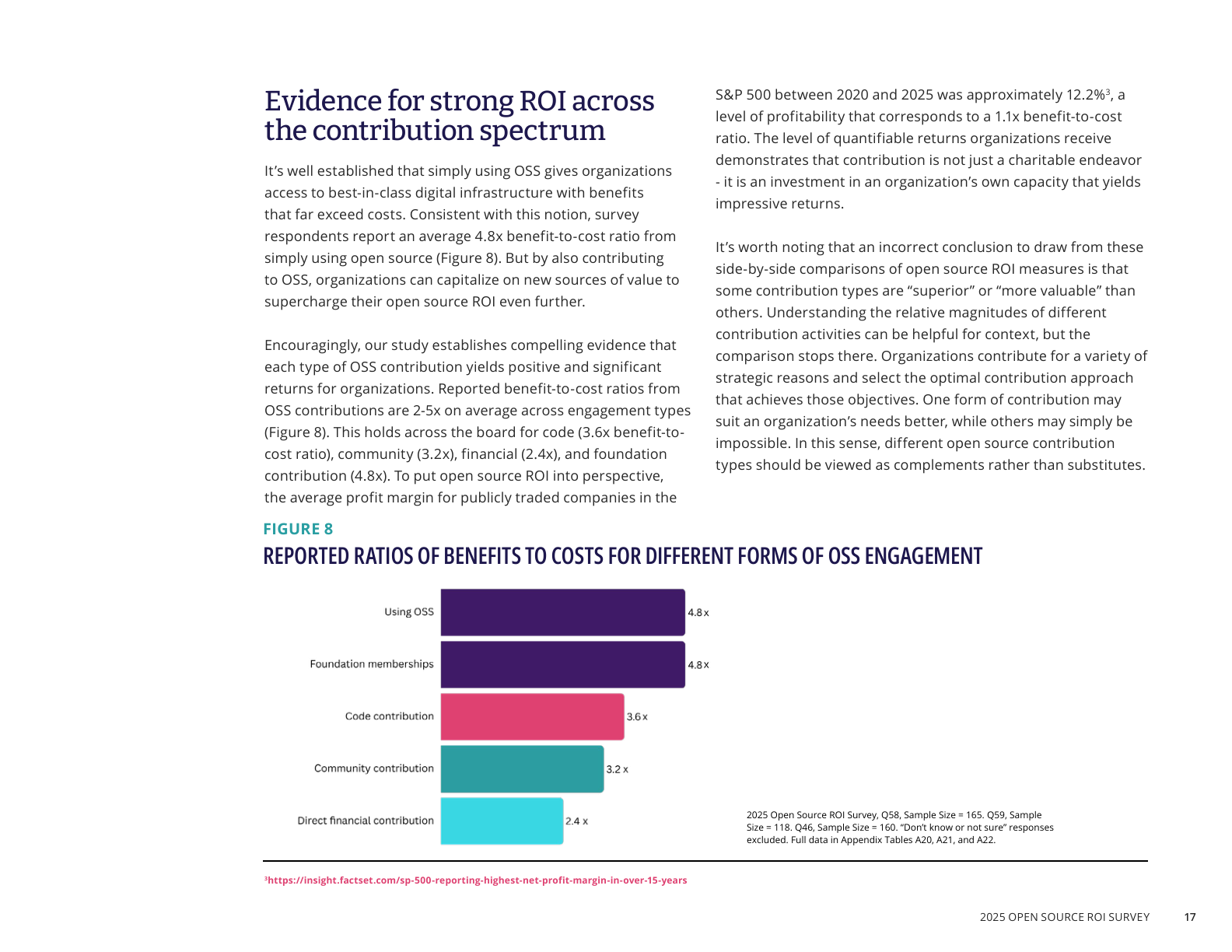
This aligns closely with the concept of "moving from using open source to contributing to open source, and ultimately leading open source" proposed in the Data Chapter. The Data Chapter emphasizes that China must break through the bottlenecks of its "domestic circulation" model and achieve a leapfrog transition—from "using open source" to "contributing to open source" and ultimately to "leading open source." The ROI survey explains why enterprises are willing to undertake this shift: failing to contribute entails real costs. Forty-five percent of organizations maintain private OSS forks; on average, each organization manages 86 forks, with each release cycle consuming over 5,000 hours of labor; maintaining private forks requires an average of 5,160 hours per release cycle, amounting to approximately US$258,000 in maintenance costs (Source: Linux Foundation Research, ROI for Open Source Software Contribution, 2026, p.7, p.13). The misalignment of upstream and downstream roadmaps results in an average annual workaround cost of US$670,000, which rises to US$1,060,000 for large organizations.
Therefore, open-source contribution is not a charitable initiative, but rather a TCO optimization strategy. By contributing patches back to upstream repositories, enterprises can reduce the burden of maintaining private forks; by participating in community discussions, they can gain early insights into the project roadmap; by joining foundations, they can engage in governance and mitigate supply chain risks; and by providing funding, they can secure greater project sustainability and robust security response capabilities. ROI surveys indicate that among respondents, 66% reported that after establishing contribution relationships, upstream maintainers responded more quickly to security issues and bug reports; as a result, the average product development speed of these organizations increased by 10%.
This gives rise to the fifth chain: the deeper an enterprise relies on open source, the higher the cost of private forks and misaligned roadmaps becomes; the higher the cost, the more financially justified it is for the enterprise to contribute to the upstream ecosystem; the greater the contribution, the more effectively the enterprise can influence roadmap development, enhance security response capabilities, and reduce Total Cost of Ownership (TCO); consequently, the contributions made by end-users themselves become an integral part of the open-source commercialization ecosystem.
This is particularly important for Chinese enterprises. If Chinese companies merely "use" open-source projects or make "patch-based contributions" within the global open-source ecosystem, they will find it difficult to gain a voice in governance; however, by gaining access to project core development through OSPO, foundation membership, maintainer cultivation, global community operations, and long-term financial support, they can transform their technology usage into ecosystem influence—and further into commercial bargaining power.
5.3 OSPO: From Compliance Office to Commercialization Governance Hub
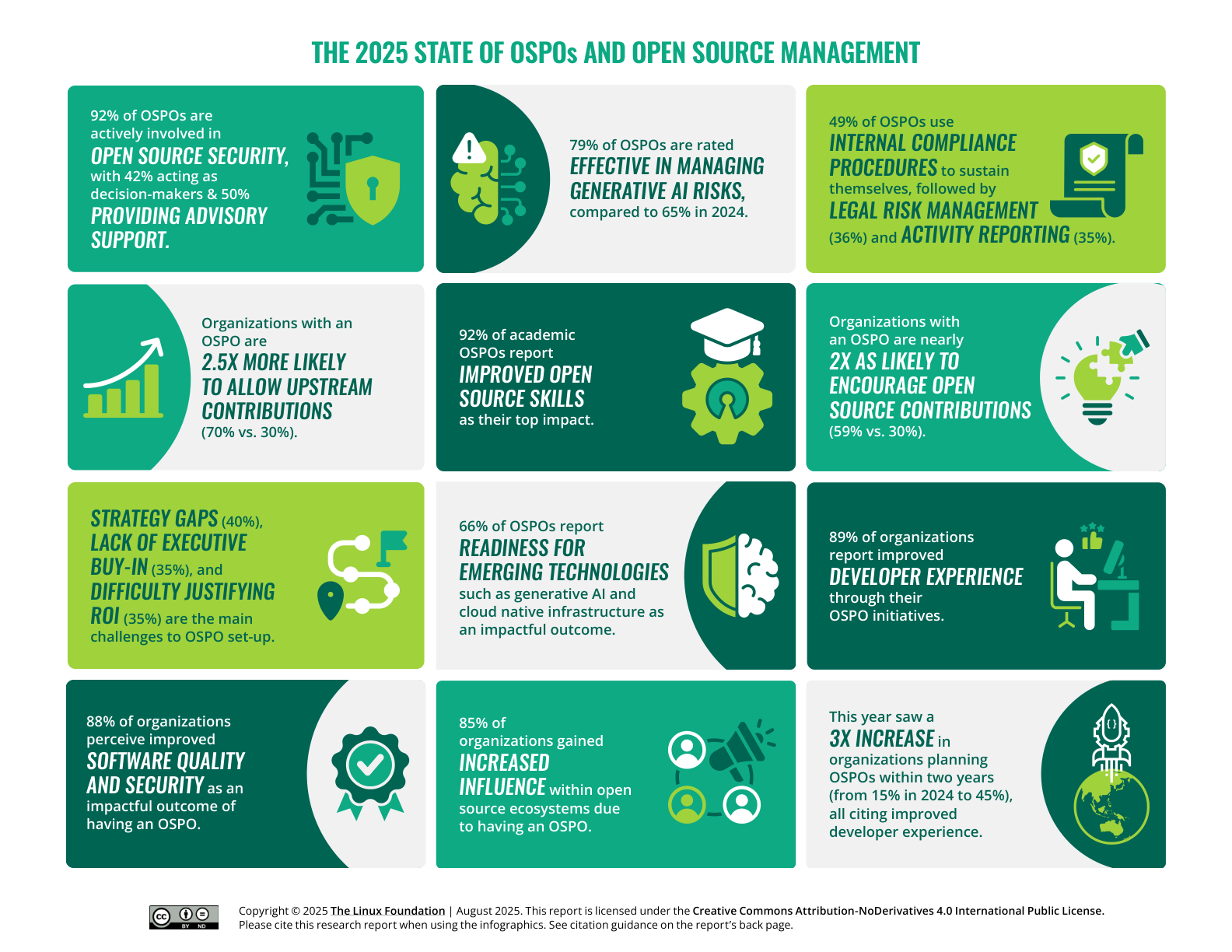
OSPO serves as an organizational interface that bridges an enterprise's internal business objectives with its external open-source ecosystem. According to the Linux Foundation OSPO Report, organizations with an OSPO enable 70% of their upstream contributions, compared to 30% in organizations without an OSPO; furthermore, organizations with an OSPO encourage 59% of their contributions, versus 41% in the control group (Source: Linux Foundation Research, The 2025 State of OSPOs and Open Source Management, 2025, pp. 5, 8). This demonstrates that an OSPO can significantly reduce internal friction when enterprises contribute to open source projects.
The commercial significance of OSPO extends beyond mere contribution to also encompass risk management. The report reveals that 92% of OSPOs engage in open-source security initiatives—among them, 42% participate directly in decision-making processes and 50% provide consulting support; additionally, 79% of OSPOs are rated as effectively managing generative AI-related risks, compared to 65% in 2024; furthermore, 66% of OSPOs report having enhanced their organization's readiness for emerging technologies such as cloud-native infrastructure and generative AI.
This directly relates to the compliance and model licensing issues addressed in the 2025 Data Edition. As the model ecosystem evolves from deployment to reuse, enterprises need structured processes to determine whether a model can be commercialized, fine-tuned, deployed across sensitive industries, or—with respect to training data traceability and derivative licensing—whether it meets all relevant requirements. The OSPO, Legal, Security, Platform Engineering, and Business teams must collaboratively decide: which open-source models can be used, which require isolation, which contributions should be returned to the upstream repository, which projects are worth funding, and which suppliers possess long-term credibility.
Therefore, OSPOs are emerging as the procurement interface and governance interface for open-source commercialization. For open-source vendors, the ability to engage with clients’ OSPOs and provide SBOMs, license statements, security advisories, contribution policies, governance charters, model risk documents and compliance materials directly determines the speed of onboarding large enterprise clients. For Chinese open-source projects going global, OSPOs are not merely an internal department within overseas customers; they serve as a critical gateway for projects to pass compliance, governance and supply-chain reviews.
5.4 Capital Markets: Community Health is Becoming a Valuation Metric
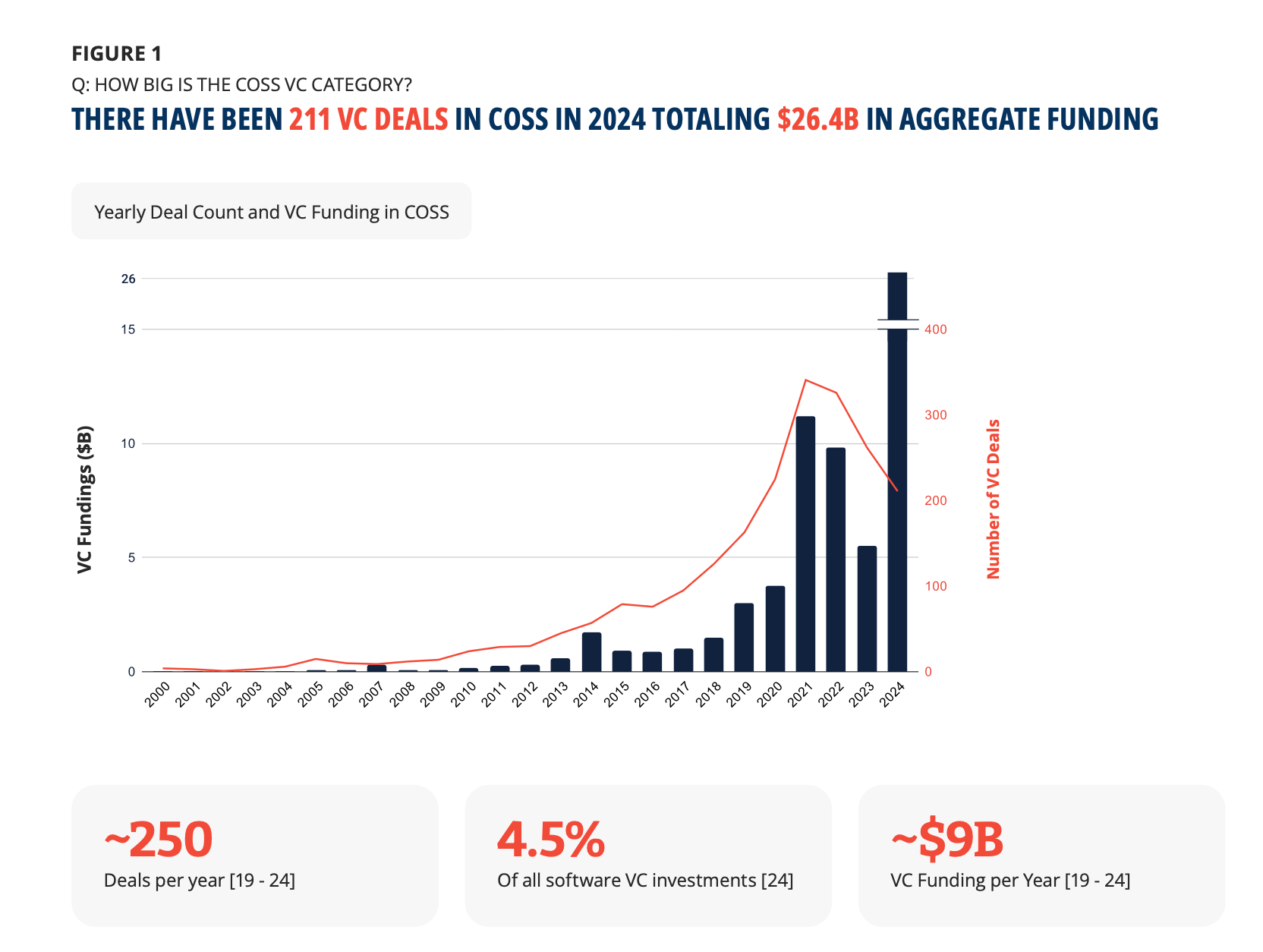
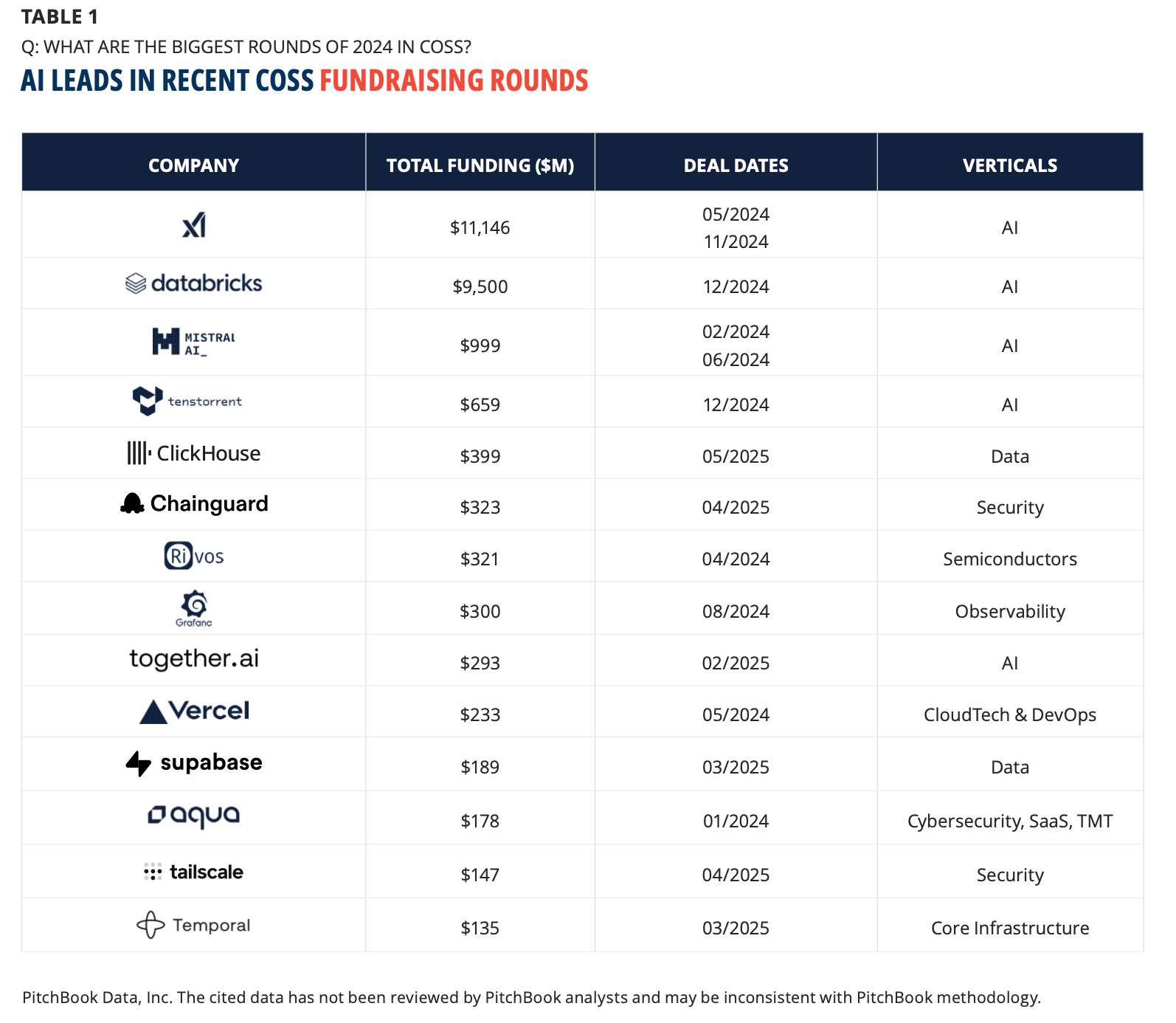
The commercialization of open source ultimately comes subject to pricing by the capital markets. According to a Linux Foundation report, since 2019, open source technology startups have received an average of approximately US$9 billion in annual investment across about 250 financing rounds; in 2024, open source technology companies raised US$26.4 billion through 211 financing transactions, accounting for 5% of all software VC investments(Source: Linux Foundation Research / Serena / COSSA, The State of Commercial Open Source 2025, 2025, pp. 2, 4, 10)
Open-source technology companies have also outperformed their closed-source counterparts significantly in terms of exit performance. The report shows that 12% of open-source technology companies backed by VC funding have completed M&A deals or secured an IPO; the median IPO valuation for open-source technology companies was US$1.3 billion, compared to US$171 million for closed-source software companies; the median M&A valuation for open-source technology companies was US$482 million, versus US$34 million for closed-source software companies.
Why do open-source companies command higher exit premiums?
The driving factor is not merely revenue, but the community itself. Technical analysis reveals that metrics such as the OpenSSF Criticality Score, the number of independent contributors, the number of contributing organizations, and submission frequency are significantly correlated with the valuation of open-source technology companies—and this correlation strengthens as the companies move through later stages of their funding cycles; specifically, the OpenSSF Criticality Score shows a correlation of approximately 0.40 with company valuation in later funding phases, while the number of independent contributors shows a correlation of approximately 0.41. Although GitHub stars can also predict company valuation, the OpenSSF Criticality Score performs better: its relative explanatory power increases from 2.3 times to 3.3 times, and the combined model achieves an explanatory power of 3.5 times.
This aligns with the OpenRank methodology presented in the 2025 Data Report. OpenRank emphasizes collaborative networks and contribution quality, whereas the Open Source Technology Report indicates that capital markets are also beginning to place greater importance on similar deep community metrics. This means that when Chinese open-source enterprises seek future financing, they should not merely showcase metrics such as the number of users, Stars, download counts, or client logos; they must also demonstrate indicators including contributor diversity, organizational engagement, project dependency growth, issue response time, release frequency, and OpenSSF/OpenRank/Safety and Health scores.
This gives rise to the sixth key link: the higher the community health score of an open-source project, the more it demonstrates that the technology is not merely the asset of a single company but rather an ecosystem asset; the stronger the ecosystem asset, the more willing the strategic acquirer will be to pay a premium for the developer network, supply chain presence, and standard influence; as a result, community health score is evolving from an operational metric into a valuation metric.
This presents both an opportunity and a challenge for Chinese open-source technology companies. The opportunity lies in the fact that China already boasts high-impact projects such as OpenHarmony, openEuler, MindSpore, PaddlePaddle, ModelScope, TiDB, Milvus, and StarRocks; the challenge, however, is that these projects need to internationalize, make their community metrics transparent and auditable, enabling overseas investors and customers to understand the value of their ecosystem.
6. Open-source Ecosystem: Industry-Specific Scenarios, Regional Ecosystems, and Maintainer Community
6.1 Industry Implementation: Evolving from "General Technology" to "High-Value Scenarios"
The ultimate destination of open-source commercialization remains within the industry. In the 2025 Data Insights report, numerous emerging projects have already demonstrated a trend toward scenario-driven adoption: KaiwuDB's kwdb – a distributed, multi-modal database designed for AIoT applications that supports the integration of time-series and relational data – has been deployed at scale across sectors such as energy and power, as well as the Internet of Vehicles; Xiaomi's ha_xiaomi_home facilitates interoperability among smart home devices; and GPUSStack addresses the GPU resource scheduling challenge for concurrent multi-model inference. These cases illustrate that the closer an open-source project aligns with real-world business pain points, the more likely it is to establish a complete commercialization pipeline.
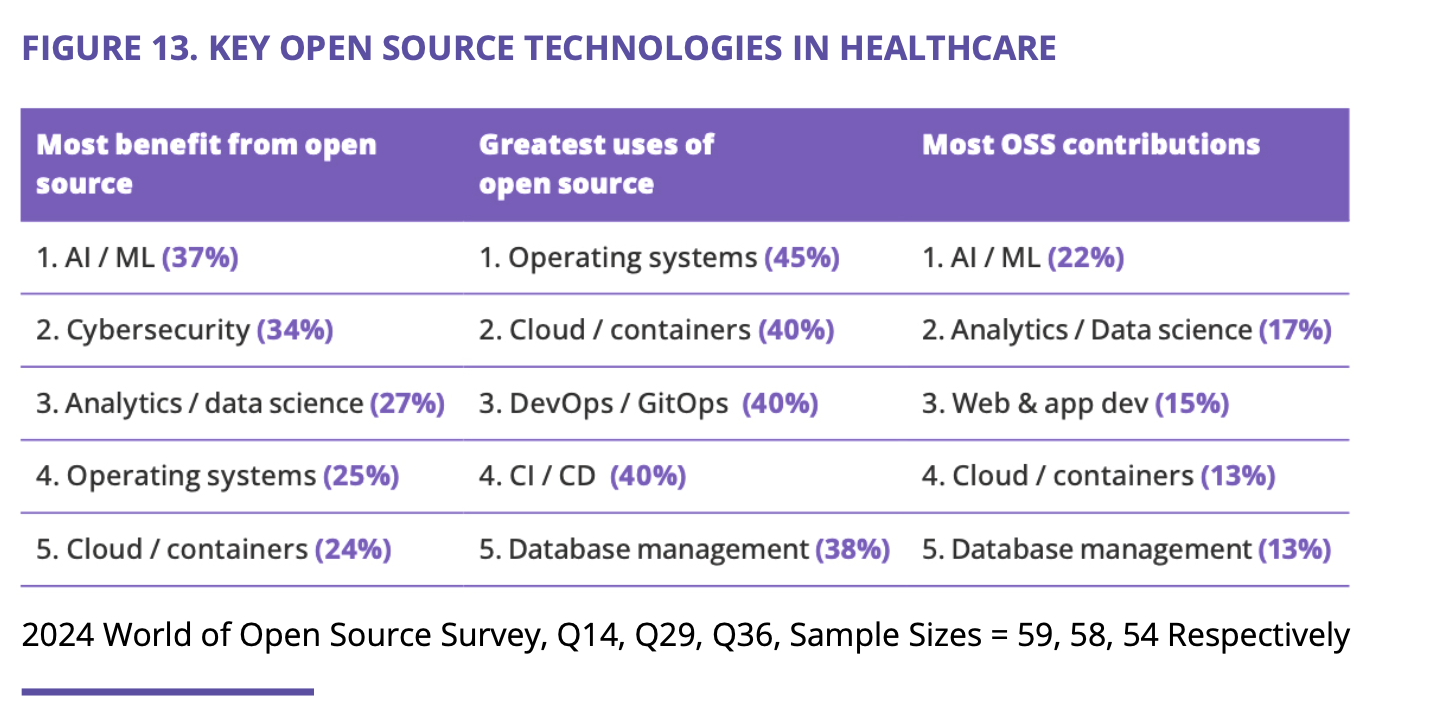
The Linux Foundation's Open Source AI Economic Impact Report also supports industry-specific assessments. The report indicates that AI could generate an additional value of US$150–260 billion for the global healthcare sector; open-source models are particularly attractive due to their cost efficiency, scalability, fine-tuning capabilities, and privacy protection (Source: Linux Foundation Research, The Economic and Workforce Impacts of Open Source AI, 2025, pp. 4, 23).
In the manufacturing sector, the potential value of AI for advanced manufacturing ranges from US$170 billion to US$290 billion; open models hold significant potential for impact due to their ability to be flexibly integrated into operational processes (Source: Ibid., p. 26). In the energy sector, AI could generate additional revenue ranging from US$150 billion to US$240 billion; open-source tools can facilitate the development of smart grids, data integration, and trust-building initiatives.
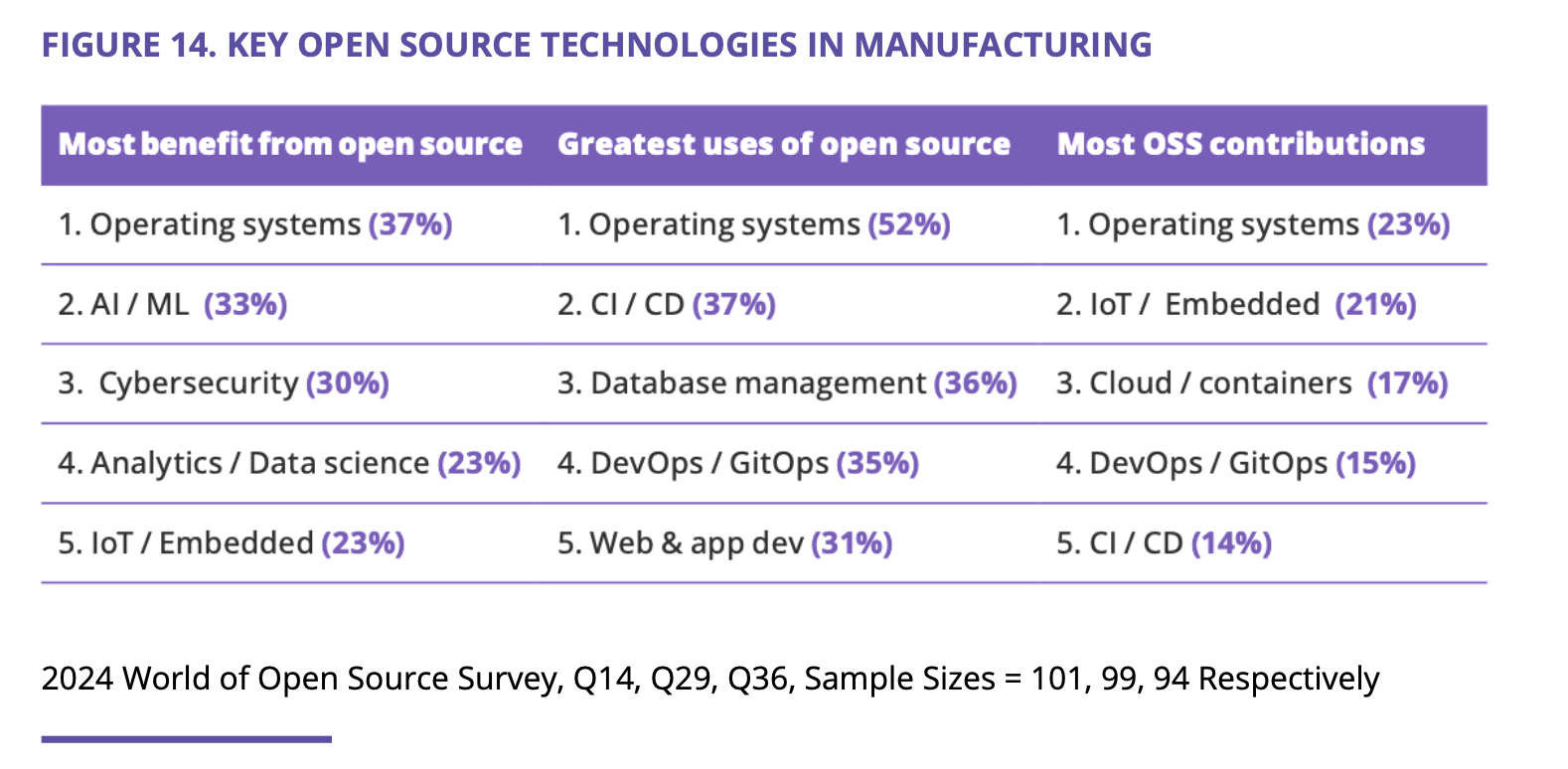
These industries share common characteristics: data sensitivity, complex processes, stringent compliance requirements, strong preference for private deployment, and significant long-term maintenance needs. These are precisely the ideal scenarios for the commercialization of open-source solutions. While closed-source APIs allow for rapid pilot testing, customers in sectors such as healthcare, finance, manufacturing, and energy often require local deployment, interpretability, security auditing, model controllability, and long-term support. By offering industry-specific packages, compliance certifications, data connectors, private model services, and enterprise support, open-source projects can transform open technologies into high-value business contracts.
The financial industry exemplifies the necessity of contribution-driven collaboration. The FINOS perspective within the ROI survey highlights that, under the pressures of modernization and AI, the financial services sector needs to shift from widespread adoption of open source to extensive contribution to open source—to reduce technical debt, enhance efficiency, and secure long-term technical control (Source: Linux Foundation Research, ROI for Open Source Software Contribution, 2026, p. 15). This offers valuable insights for China's fintech, database, privacy computing, blockchain, and risk control AI projects: industries with high compliance requirements are not incapable of using open source; rather, they have an even greater need for trusted open source solutions.
6.2 Regional ecology: Commercialization occurs not only within individual companies but also across urban agglomerations.
When understanding the commercialization of open source solely from the perspective of enterprises or projects, it is easy to overlook a more fundamental variable: cities and regions. The commercialization of open source relies on the combined influence of developer density, industrial ecosystems, capital supply, academic talent, policy support, and community activities; however, these factors are not uniformly distributed across the country but are instead concentrated within several urban agglomerations. The Data Section provides an important signal in the Administrative Divisions Influence Ranking: among the Global OpenRank Top 100 administrative divisions, the United States has 23 entries, Germany has 10, and China and Brazil each have 8 entries, tying for third place. This indicates that China is no longer merely dependent on the participation of individual cities in the global open source ecosystem, but has initially established multiple regional open source clusters.
From an internal perspective in China, the Data Section summarizes China's open-source ecosystem as "Dual-Core Drive, Gradient Diffusion, and Regional Synergy." Beijing's OpenRank is 1,248.72, with 3,321,900 developers, ranking first; Shanghai's OpenRank is 1,060.37, with 2,440,500 developers, ranking second; Guangdong, Taiwan, Zhejiang, Jiangsu, Sichuan, Hubei, and other regions are all among the Top 15. The commercial implication behind these figures is that different regions are forming distinct open-source business division of labor.
Beijing's advantage lies in the synergy of "basic research, leading enterprises, and policy resources." The Data Section notes that Beijing hosts the headquarters of tech giants such as Huawei, Baidu, Xiaomi, and ByteDance, as well as research institutions including Tsinghua University, Peking University, Beihang University, and the Chinese Academy of Sciences, along with support from open-source industrial parks and innovation funds in areas such as Haidian and Changping. This makes Beijing particularly well-suited for incubating AI frameworks, foundational models, operating systems, development tools, and research-driven foundational software projects. Its commercialization approach often does not involve the rapid monetization of individual products, but rather leverages leading enterprises, research institutions, and policy-driven scenarios to elevate open-source projects into national-level infrastructure and industry standards.
Shanghai's competitive advantage lies in its "internationalization, robust financial ecosystem, and synergy within the Yangtze River Delta region." As noted in the Data Section, Shanghai's concentration of foreign-funded enterprises and multinational corporations facilitates the alignment with open-source standards; simultaneously, it has cultivated distinctive ecosystems in fields such as AI-driven finance, robo-advisory, and blockchain, establishing a closed-loop system for R&D, application, and services in collaboration with cities like Hangzhou, Suzhou, and Nanjing. This positioning makes Shanghai particularly well-suited as an international gateway for the commercialization of open-source technologies and as a testing ground for industry-wide compliance initiatives. For projects spanning databases, privacy-preserving computation, financial-grade distributed systems, compliant AI, and trusted supply chains, Shanghai's financial clientele and global business environment naturally generate demand.
Guangdong—particularly Shenzhen—represents an open-source commercialization pathway focused on "hardware, IoT, robotics, and edge intelligence." The Data Section notes that Guangdong ranks third nationwide, with its influence primarily driven by Shenzhen; Shenzhen has achieved continuous breakthroughs across various fields—including hardware open-source, RISC-V, IoT, AI chips, and robotics. This indicates that Guangdong's open-source commercialization approach will be more aligned with the concepts of "integrated software and hardware" and "edge-case scenarios": open-source operating systems, embedded toolchains, AI chip SDKs, robotics frameworks, smart home protocols, and edge inference platforms could all facilitate the creation of a closed-loop ecosystem spanning from project development to product deployment and supply chain integration.
Zhejiang and Jiangsu exemplify the "dual-drive approach of digital economy and smart manufacturing." Hangzhou leverages enterprises such as Alibaba and Ant Group to continuously expand its capabilities in cloud computing, database technologies, and large-scale AI models; Suzhou focuses on the Industrial Internet, smart manufacturing, and edge computing. The commercialization of open-source technologies in these two regions is likely to center around cloud-native databases, enterprise application development frameworks, AI Agent tools, industrial data platforms, low-code applications, and manufacturing edge intelligence.
The central and western regions represent the future growth drivers. The Data Section highlights that provinces such as Sichuan, Hubei, and Shaanxi are demonstrating strong growth momentum; meanwhile, cities like Chengdu, Wuhan, and Xi'an – leveraging their university resources and industrial policies – are gradually fostering an open-source ecosystem based on a "university–enterprise–community" collaboration model, positioning themselves as potential growth poles. This aspect is crucial for commercialization. Open-source initiatives can not only serve existing industrial hubs but also enable emerging regions to access global technology networks at low cost, serving as a new catalyst for regional digital economy development. For local governments, building an open-source ecosystem is not merely about hosting events or establishing industrial parks; rather, it involves attracting developers through open-source projects, aligning enterprise needs with community-driven efforts, nurturing and retaining contributors through universities, and lowering the technological barriers for small and medium-sized enterprises via public platforms.
Therefore, there exists a clear causal relationship between regional ecology and commercialization: urban developer density determines the early supply of open-source projects; industrial scenarios define the demand for commercialization; universities and communities determine the long-term talent supply; policies and funding channels dictate investments in public infrastructure; and cross-regional collaboration determines whether a project can expand from a local pilot initiative to a national market. This also explains why China's open-source commercialization efforts should not focus solely on leading enterprises in cities like Beijing, Shanghai, Guangzhou, and Shenzhen, but should also encompass new projects, emerging communities, and industrial scenarios across regions such as Chengdu, Xi' an, Wuhan, Hefei, Suzhou, and Hangzhou. Future commercially successful open-source companies are unlikely to emerge solely from large internet corporations; rather, they will likely arise from the synergy of "local industrial pain points + university talent + open-source communities + professional services."
6.3 Talent Supply: Open Source Summer demonstrates that commercialization requires investing in a sustainable developer ecosystem.
Commercialization requires not only projects and customers but also maintainers. The most often overlooked cost in open-source projects is the ongoing maintenance cost—encompassing version releases, issue resolution, documentation updates, security patches, compatibility adjustments, community governance, and onboarding of new contributors. These efforts do not directly translate into immediate commercial revenue; however, they determine whether a project can earn long-term trust from enterprises. Therefore, open-source talent development serves as the foundational infrastructure for commercialization.
The analysis from the "Open Source Summer" initiative in the Data Section serves as an important case study. The Open Source Summer has been held six times between 2020 and 2025, aiming to encourage university students to participate in the development and maintenance of open-source software and to foster the growth of outstanding open-source communities. By 2025, OSPP had released a total of 565 projects; among these, 517 projects were selected by students, and 436 projects were successfully completed, representing a completion rate of 77% across 165 participating universities. This dataset demonstrates that China has established a relatively stable mechanism for attracting new talent into the open-source community.
From a commercial perspective, the value of Open Source Summer extends far beyond the simple fact that "students have completed a project." More importantly, it enables students to gain hands-on experience in real-world open-source communities—engaging in issue tracking, submitting PRs, participating in code reviews, communicating with fellow developers, and collaborating on documentation and version management. These skills are precisely the types of competencies that commercial open-source companies are most in need of. Enterprise-level open-source projects do not require engineers who merely know how to write code; instead, they need individuals who can communicate effectively with unfamiliar developers within an open, collaborative environment, understand upstream specifications, respect community governance practices, and maintain long-term compatibility.
Another value of the Open Source Summer initiative is to position universities as a long-term supply source for the commercialization of open source. As noted in the Data Section, the University of Electronic Science and Technology of China ranked first among universities by contribution level in 2025, based on its large student population and the depth of its contributions; among the Top 20 universities, 18 also participated in OSPP last year. This demonstrates that cultivating open source talent is not a one-off initiative but can be turned into a sustained investment by universities. For local open source ecosystems, the continuous participation of universities yields three key outcomes: first, it provides a stable pool of maintainers; second, it facilitates the integration of research findings into industry through open source approaches; and third, it enables local enterprises to access cutting-edge technologies at lower costs.
This establishes a seventh chain: the deeper open-source commercialization integrates into an enterprise's production system, the higher the requirements placed on the maintainers' capabilities; these capabilities cannot be developed solely through internal corporate recruitment – they require collaborative cultivation by universities, communities, and projects; initiatives such as "Open Source Summer" immerse students in real-world collaborative networks, helping to build a pipeline of future maintainers; the more stable this pipeline of maintainers is, the more easily the project can earn long-term trust from enterprises.
This chain also serves as a reminder that the commercialization strategy should not be limited solely to discussions of fundraising and revenue generation. Without a proper onboarding mechanism for new contributors, an open-source project may rely on its core team for short-term support; however, in the long run, it risks facing a talent gap among maintainers. Should such a talent gap occur, enterprise customers may become concerned about security response times, roadmap clarity, and version support – all of which can undermine the project's commercial viability. Therefore, commercial open-source companies should integrate talent development, mentorship programs, documentation contributions, the "Good First Issue" initiative, community training, and the design of "Open Source Summer" programs into their overall business strategy, rather than treating these activities as mere ancillary tasks for their community departments.
7. Risks and Boundaries: The commercialization of open source in the AI era must not undermine public trust in open source.
The commercialization of open-source ecosystems in 2025 should not focus solely on growth but also address associated risks. As highlighted in the Data Section, OpenRank's contribution level and influence are expected to decline simultaneously by 2025; this trend may be linked to generative AI tools replacing some forms of community collaboration, the migration of developer platforms, an increase in small-scale team projects, and a weakening of external connectivity. This suggests that while AI can enhance individual efficiency, it may also reduce the density of public collaboration.
The CNCF report also raises similar concerns: AI workloads can impose machine-driven automation-related usage pressure on open-source infrastructure; therefore, organizations need to use their infrastructure responsibly through measures such as caching, resource quotas, monitoring, and upstream contributions (Source: CNCF, Annual Cloud Native Survey, 2026, pp. 9, 20). If enterprises treat open-source infrastructure merely as a free resource without assuming the responsibilities for its maintenance, funding, or governance, it can lead to the "Tragedy of the Commons."
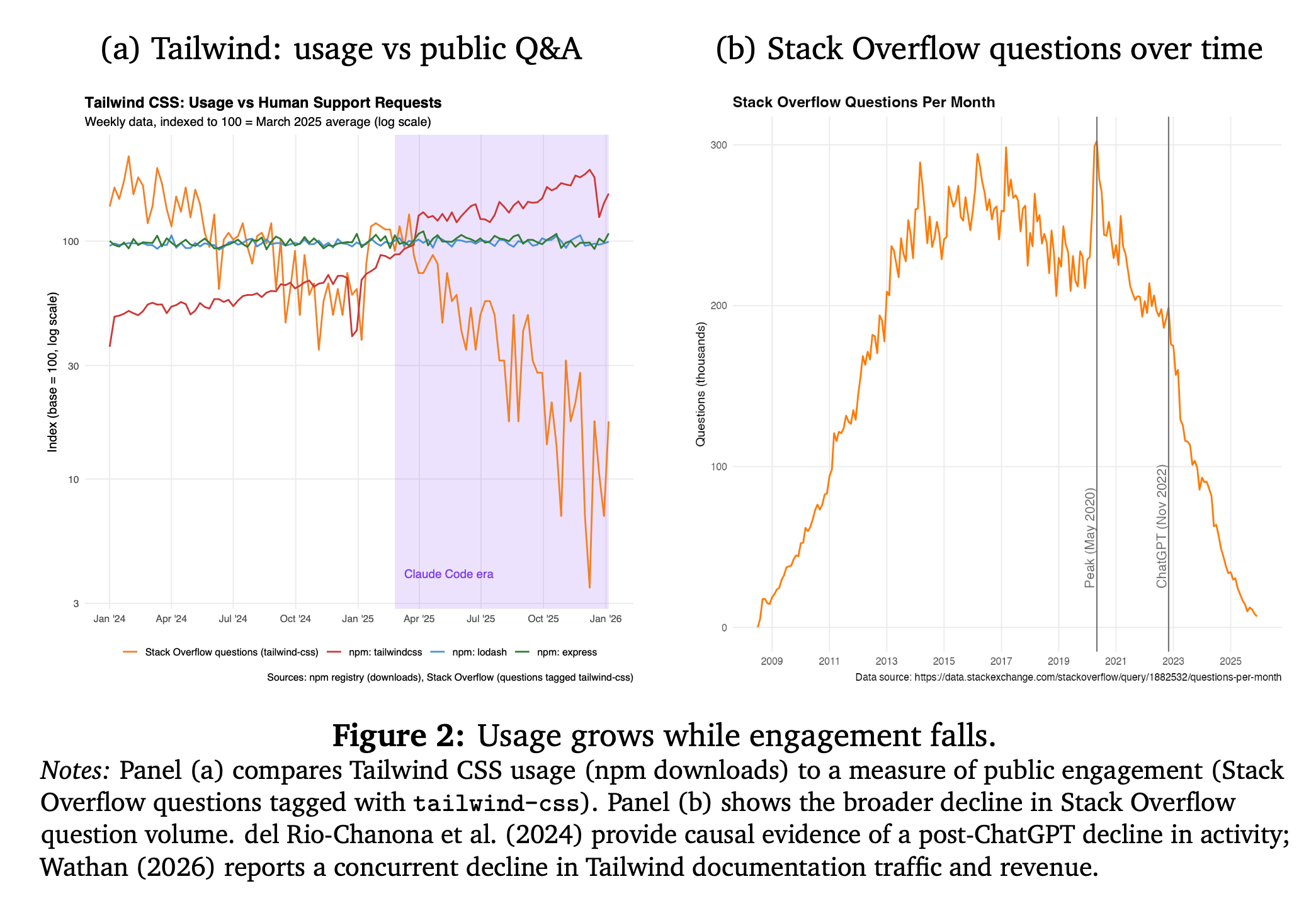
Vibe Coding further exacerbates this issue. When AI agents automatically select and combine dependencies, open-source projects may see an increase in downloads, but they lose access to documentation, issue feedback channels, Q&A discussions, and business leads. The paper "Vibe Coding Kills Open Source" documents a relative decline of approximately 25% in Stack Overflow activity within six months after the emergence of ChatGPT; while Tailwind CSS downloads continued to rise, its public Q&A activity declined, documentation traffic fell by about 40% compared to early 2023, and revenue decreased by nearly 80% (Source: Miklos Koren et al., Vibe Coding Kills Open Source, 2026, p. 6).
This imposes new requirements on institutional design for commercialization: platforms need to make the open-source dependency patterns of AI agents more observable; enterprises need to disclose, audit, and provide feedback on their key dependencies; foundations need to explore ways of supporting maintainers based on usage volume, criticality, or risk level; and commercial open-source companies need to develop enterprise services, managed services, and support models that do not rely entirely on direct interaction with developers. Otherwise, AI could turn open source into a more efficient input resource, while simultaneously undermining the channels through which maintainers can receive compensation.
8. Open Source Trend Forecast: Five Future Directions for the Commercialization of Open Source in China
First, the focus of commercialization is shifting from model deployment to model reuse and the industrialization of inference. The Data Section indicates that the model ecosystem is evolving from model deployment toward model reuse; specifically, download metrics better reflect whether a model has been integrated into products, scripts, workflows, or deployed locally (Source: Data Section, web pages 823–828,960–969). Consequently, future commercial opportunities will concentrate on inference services, model gateways, RAG, Agents, model evaluation, private deployment, model security, and compliance auditing.
Second, foundational software will continue to undergo "foundation-to-apis" transformation. The fact that OpenHarmony and openEuler have entered the global project leadership ranks demonstrates that China's foundational software ecosystem is now capable of serving as a public technological foundation. Future commercialization will no longer rely solely on the projects themselves, but will depend on commercial distributions, industry certifications, migration services, long-term support, hardware compatibility, and ecosystem applications.
Third, the key to globalization has shifted from "the number of developers" to "ecosystem attractiveness." In China-led projects, the share of local contributions amounts to 79.14%, whereas the share of overseas contributions is relatively low; in U.S.-led projects, local contributions account for only 38.21%, with over 60% originating from overseas. Therefore, for Chinese open-source projects to gain global traction, they must increase the participation of overseas contributors and promote governance transparency as well as international collaboration.
Fourth, an enterprise's open-source capability will evolve from an engineering capability into an organizational capability. OSPO data indicates that organizations with OSPOs are more likely to enable and encourage upstream contributions, and are better positioned to manage open-source security and generative AI-related risks (Source: Linux Foundation Research, The 2025 State of OSPOs, 2025, p.5, p.12). The future competition in open-source commercialization will not merely be a contest among project teams; it will also be a contest among enterprises' capabilities in OSPOs, legal affairs, security, platform engineering, and developer relations.
Fifth, community health metrics will be integrated into capital valuation processes. An Open Source Technology Report indicates that the OpenSSF Criticality Score, the number of contributors, organizational engagement, and submission frequency are significantly correlated with company valuation (Source: Linux Foundation Research / Serena / Open Source Technology A, The State of Commercial Open Source 2025,2025, pp. 45–47). Metrics such as OpenRank and the OpenSSF Criticality Score will increasingly be incorporated into investment and financing frameworks, M&A processes, procurement systems, and policy assessment mechanisms.
8.1 Action Recommendations for Chinese Open-Source Enterprises
First, establish a quantifiable community metrics system. Enterprises should not focus solely on metrics such as Star count, Fork count, or WeChat public account popularity; instead, they should conduct long-term tracking of indicators including active contributors, number of contributing organizations, PR merge rate, issue resolution time, version release frequency, downstream dependencies, download and reuse rates, OpenRank, and OpenSSF Criticality Score. In the future, these metrics will be incorporated into customer procurement processes, foundation evaluation frameworks, and capital due diligence assessments.
Second, treat English-language documentation and international collaboration as part of open-source infrastructure. The insufficient overseas contribution from Chinese projects is largely attributable to shortcomings in documentation, communication, governance, and roadmap transparency. For enterprises aiming to develop global open-source technologies, it is essential to invest in English-language documentation, relationships with overseas developers, international community events, cross-timezone maintenance, and open governance. These investments may appear as costs in the short term, but in the long run, they contribute to building a robust ecosystem.
Third, define your licensing and commercial boundaries as early as possible. Commercializing an open-source project is most likely to encounter issues related to licensing. Companies need to clearly determine which components should remain open-source and which capabilities should be offered as cloud services, enterprise editions, hosted services, or compliance services with associated fees; at the same time, they should avoid making frequent changes to their licensing terms, as this could undermine community trust. A license is not merely a legal document—it is an integral part of the business model.
Fourth, prioritize OSPO capabilities. Whether large enterprises adopt open source or open-source companies sell their products externally, they all require OSPO or similar functions to manage risks related to open source adoption, contribution, compliance, security, and AI-generated code. Without organized capabilities, open source usage can become an implicit risk; with organized capabilities, open source contributions can translate into a clear ROI.
Fifth, treat industry-specific use cases as the starting point for commercialization. While general-purpose developer tools are well-suited for community-wide adoption, high-value revenue often stems from industry-specific scenarios. The financial sector demands compliance and stability; the healthcare sector requires privacy protection and localization; manufacturing relies on edge deployment and industrial data integration; and the energy sector depends on secure, trustworthy systems and long-term operational maintenance. Open-source projects should address the real-world challenges faced by these industries when designing their products and services—rather than merely packaging them around technical features.
Sixth, proactively engage with foundations and standards organizations.For Chinese projects to gain global trust, they need to evolve from standalone corporate initiatives into ecosystem-based initiatives. Foundation stewardship, open governance, participation in standardization, and collaborative co-creation can alleviate procurement concerns among overseas customers and attract more contributors. This is particularly important for foundational software, AI frameworks, model protocols, data infrastructure, and security tools.
Seventh, channel the efficiency benefits derived from AI back to the upstream community.The more enterprises utilize AI-driven programming tools, the greater their responsibility to ensure the sustainability of project maintainers. This can be achieved by returning a portion of the AI productivity gains to the open-source ecosystem through initiatives such as SBOMs,dependency analysis, critical project funding, contribution hours tracking, foundation membership programs, and security response collaborations. Otherwise, the higher the efficiency of AI adoption, the greater the risk of depleting the public goods available within the open-source ecosystem.
The underlying common logic behind these recommendations is that, after 2025, open source commercialization will no longer be merely a growth strategy for individual projects, but rather a comprehensive set of systemic capabilities. This requires enterprises to simultaneously possess the capabilities to commercialize technological products, manage communities, engage in global collaboration, deliver compliant solutions, understand industry dynamics, and craft compelling capital narratives. With a substantial number of Chinese open source projects and developers already making their mark on the global stage, the next step is to organize these capabilities into a sustainable commercialization ecosystem.
The concept of "commercialization" is clearly defined across three layers: The first layer encompasses a project or company's revenue-generating capability, including cloud services, enterprise editions, managed services, industry-specific solutions, and technical support; the second layer refers to the end-user's value recovery capability, which includes reducing procurement costs, minimizing private forkings, enhancing security response capabilities, gaining influence over product roadmaps, and shortening product time-to-market; the third layer pertains to value accumulation at the ecosystem level, encompassing standard influence, developer networks, regional industrial clusters, foundation governance, and capital market valuation. Only by clearly defining all three layers simultaneously can we prevent the narrow interpretation of open-source commercialization as merely "selling software": data reveals the ecosystem structure, and this ecosystem structure determines trust, collaboration, and commercial returns.
9. Case Study: Model Platform, Low-Cost Inference, and Upstream Trust
The 2025 Data Edition, which incorporates both Hugging Face and ModelScope into its analysis, effectively marks the expansion of data objects covered in China's annual open-source report from "code repositories" to "model repositories." This represents a milestone for the Commercialization Edition. While code repositories primarily facilitate software development collaboration, model repositories support model publishing, reuse, fine-tuning, downloading, liking, licensing, model cards, and community feedback. As AI becomes the core of open-source innovation, model platforms are emerging as a new form of open-source commercial infrastructure.
The Data Section indicates that as of the end of 2025, Hugging Face boasts over 13 million users and 2.5 million models, while ModelScope has over 16 million users and 150,000 models. In terms of scale, ModelScope already enjoys a substantial domestic user base; however, in terms of global impact, Hugging Face remains the core platform for international model collaboration. The commercialization of open-source AI in China must simultaneously leverage both ecosystems: one provides global visibility and connectivity for international developers, while the other offers localized industrial scenarios and a foundation of Chinese developers.
The business logic of model platforms differs from that of traditional open-source platforms. Traditional code projects typically gauge popularity and collaboration through metrics such as GitHub stars, forks, issues, PRs, and releases; in contrast, model platforms require a comprehensive view encompassing downloads, likes, derivative models, model types, licenses, datasets, inference endpoints, and application integrations. The Data section emphasizes that download counts better indicate whether a model is being continuously integrated into products, scripts, workflows, or local deployment solutions, whereas like counts more closely reflect whether a model has received concentrated attention within a specific time window. This underscores the need to distinguish between "being discussed" and "being used" in model commercialization: being discussed builds brand awareness, while being used generates an income foundation.
For example, the "Data" section notes that models such as sentence-transformers/all-MiniLM-L6-v2 and google-bert/bert-base-uncased have consistently ranked among the top 20 most downloaded models over time – this indicates that a significant portion of the stable download demand stems from underlying component models. These models may not be the most highly publicized, yet they are frequently integrated into retrieval, classification, recognition, content moderation, and workflow systems. In contrast, models like FLUX.1-dev and DeepSeek-R1 tend to experience peak download volumes, suggesting that they have garnered concentrated community recognition during certain key months. This insight for commercial deployment is that underlying component models are best suited for serving as infrastructure services, whereas popular experience-driven models are more appropriate for brand promotion and as entry points for applications; the two should not be conflated.
For Chinese model companies, what truly matters is not the short-term popularity of a single release, but the establishment of a long-term, reusable ecosystem. When a model is downloaded and integrated into business processes by a large number of enterprises, it can give rise to a comprehensive suite of commercial services—including quantitative analysis services, fine-tuning services, industry-specific adaptation, inference optimization, model monitoring, security assessment, and compliance auditing. The more mature the model platform is, the richer the range of commercial services centered around that model will be. In the future, competition among commercial open-source AI companies may no longer revolve around "which model is stronger," but rather around "which model is easier to reuse, deploy, audit, and further develop."
9.1 DeepSeek and utility-driven commercialization: Low cost is not the conclusion – it's the starting point.
DeepSeek represents an inevitable case study in the commercialization of China's open-source initiatives by 2025. In the China Open-Source Project Influence Growth Pioneer List, the deepseek-ai/DeepSeek-V3 model was listed, with its overall ranking rising by 1,233 places – its OpenRank standing at 394.05, representing a year-on-year increase of 370.39. Among the Hugging Face "Like" -permanent models, DeepSeek-R1, DeepSeek-R1-0528, and DeepSeek-R1-0528-Qwen3-8B also made the list, demonstrating that DeepSeek is not merely a focal point in domestic discourse but has also gained traction within the global model community.
When examining DeepSeek within the framework of the "Reasoning Cost Revolution," it becomes clear that full-stack technologies—such as MoE, the separation of P&D, and communication library optimization—have significantly transformed both the deployment costs and the efficiency of large language models. However, in the commercialization section, the more important task is to clarify the causal relationship: low cost is not merely a conclusion, but rather the starting point for new business models.
As inference costs decrease, applications that were previously uneconomical become viable. Use cases such as customer service, search engines, office assistants, code generation, knowledge base Q&A systems, industrial quality inspection, marketing content generation, educational tutoring, medical documentation, and legal research may transition from pilot projects to large-scale deployment. As adoption scales up, customers are no longer solely concerned with the price per token; instead, they focus on overall throughput, latency, system stability, private deployment options, access control, audit logging, and cost forecasting. Consequently, commercialization is shifting from the model itself to inference platforms, model gateways, industry-specific solutions, and operations and maintenance services.
This captures the essence of a utility-based business model. The commercialization of electricity does not involve selling generators, but rather offering stable, measurable, and seamlessly integrable electricity services; similarly, the commercialization of AI does not merely entail selling AI models, but rather providing stable, measurable, and seamlessly integrable intelligent services. While open-source models lower the barrier to entry, enterprise-level customers remain willing to pay for reliability, security, compliance, and tangible performance benefits. Therefore, the lesson from DeepSeek is not that "open-source models are free, making commercialization challenging," but rather that "once the cost of AI is reduced through open-source models, a much larger service-oriented market will open up."
This finding is also consistent with the CNCF survey results: most organizations do not train models but instead consume them; the real challenge lies in deployment, resource management, and production deployment (Source: CNCF, Annual Cloud Native Survey, 2026, pp. 6–8). The greater the success of models like DeepSeek, the more they will drive market demand for downstream inference services, private deployment solutions, model compression, compatibility with domestic chips, model evaluation, and security compliance.
9.2 Valkey and Upstream Moment: How License Changes Build Trust
The Commercial Perspective examines a seemingly negative phenomenon—namely, license changes, project governance disputes, and supplier lock-in—and explores why these factors can actually give rise to new business opportunities. The market response triggered by the change in the Redis license is referred to as the "Upstream Moment," with Valkey serving as a typical example of institutional security. This case demonstrates that when enterprises deploy open-source components in critical systems, the licenses and governance structures themselves can become sources of commercial risk.
For enterprise customers, one of the greatest benefits of open-source software is its controllability: the ability to review the code, self-host the software, avoid being locked into a single vendor, and, if necessary, fork or migrate the software. However, if a project has been controlled by a single commercial company for an extended period, or if its licensing strategy may change in line with shifting business objectives, customers will re-evaluate the associated risks. Financial, e-commerce, cloud service, and government and enterprise customers are particularly sensitive, as their systems often have long lifecycles, the cost of migration is extremely high, and their compliance obligations are more stringent.
The insight from Valkey is that the act of hosting projects through a neutral foundation itself can generate commercial value. While a foundation does not automatically guarantee a project's success, it can mitigate the risk of being controlled by a single company, provide transparent governance, and establish mechanisms for multi-stakeholder participation. For customers, this institutional shift reduces risks associated with future license changes, lack of roadmap transparency, and supplier lock-in. For commercial enterprises, offering enterprise distributions, migration services, hosting services, and technical support around foundation-based projects can potentially unlock even larger market opportunities.
This is also an issue that Chinese foundational software companies must pay close attention to when expanding overseas. If Chinese projects aim to enter the markets of international financial institutions, cloud service providers, or critical infrastructure clients, they must address governance-related questions: Who owns the trademark? Is the licensing arrangement stable? Who is responsible for PR? How should security vulnerabilities be disclosed? Is the roadmap publicly available? If the primary contributing company adjusts its strategy, can the project still be sustained? These are not merely community-related details but rather commercial procurement considerations. The stronger the institutional confidence, the more willing customers will be to integrate such projects into their core systems.
9.3 Conclusion: The journey from technological leadership to commercial leadership is mediated by governance and collaboration.
The 2025 data already demonstrates that China's open-source landscape is no longer on the periphery. Chinese developers rank among the top tier globally in terms of scale; OpenRank contribution ranks second worldwide; OpenHarmony holds the top position in global project influence; Huawei ranks second in global corporate influence; and Chinese models account for the largest single share in the Hugging Face download volume. These achievements collectively demonstrate that China's open-source ecosystem now possesses the foundation to evolve from a mere technology participant into an ecosystem shaper.
However, the next leap in commercialization is not simply about packaging these technological achievements into products; the real breakthrough lies in three key elements.
First, the capacity for contribution should be transformed into global ecological appeal. Chinese projects require more overseas contributors, greater participation from international organizations, clearer English-language documentation, and more transparent governance processes. Otherwise, a project may succeed domestically, but will struggle to become a global commercial open-source infrastructure.
Second, transform the technical foundation into a trustworthy delivery model. Projects such as OpenHarmony, openEuler, MindSpore, ModelScope, TiDB, and Milvus can only evolve from open-source initiatives into procureable, auditable, and sustainable enterprise infrastructure through foundation governance, commercial distributions, industry compliance, long-term support, and an ecosystem partner network.
Third, transform open-source collaboration into quantifiable business value. Metrics such as Contribution ROI, OSPO maturity score, OpenRank, OpenSSF Criticality Score, download and reuse data, and the number of dependent projects will become new benchmarks for measuring the commercialization of open source. Commercialization is no longer just about numbers on an income statement; it also encompasses reduced TCO, mitigated supply chain risks, improved developer distribution efficiency, stronger community health, and higher capital market premiums.
Therefore, the key theme for the commercialization of open source in China by 2025 is not "open source vs. commercial use," but rather "how open collaboration can create industry-level value." AI-native technologies enable the reduction of costs for intelligent capabilities; cloud-native approaches facilitate the deployment of models into production; foundational software provides a solid basis for digital sovereignty; OSPO and foundations enable the governance of trust; and community health enables the pricing of capital. Those who can integrate these capabilities will be positioned to achieve a leap from technological leadership to commercial leadership.
References and Sources
KAIYUANSHE. 2025 China Open Source Annual Report: Data Volume. 2025.https://kaiyuanshe.github.io/2025-China-Open-Source-Report/data.html
KAIYUANSHE. 2023 China Open Source Annual Report: Commercialization Edition. https://kaiyuanshe.github.io/2023-China-Open-Source-Report/commercialization.html
2025 China Open Source Commercialization: Paradigm Shift Driven by AI Native and a New Chapter in Globalization.
Linux Foundation, Annual Report 2025.
Adrienn Lawson and Jeffrey Sica, CNCF / Linux Foundation, CNCF Annual Cloud Native Survey: The infrastructure of AI’s future, January 2026.
Bianca Trinkenreich and Adrienn Lawson, Linux Foundation Research, The 2025 State of OSPOs and Open Source Management, August 2025.
Anna Hermansen and Cailean Osborne, Linux Foundation Research, The Economic and Workforce Impacts of Open Source AI, May 2025.
Sam Boysel and Adrienn Lawson, Linux Foundation Research, ROI for Open Source Software Contribution, February 2026.
Sam Boysel, Matthieu Lavergne, and Matt Trifiro, Linux Foundation Research / Serena / A, The State of Commercial Open Source 2025, August 2025.
Miklós Koren, Gábor Békés, Julian Hinz, and Aaron Lohmann, Vibe Coding Kills Open Source, arXiv:2601.15494v1, January 2026.